



Poor chip evacuation carries hidden operational costs that quietly erode profit margins in high-volume and large-scale machining. When metal chips accumulate in the cutting zone, they cause premature tool breakage, scrap parts due to ruined surface finishes, and force excessive machine downtime for manual clearing. Operators frequently battle these issues in vertical setups, where gravity traps chips inside deep pockets and complex cavities. Relying heavily on high-pressure coolant or continuous air blasts only partially mitigates the problem. These reactive measures often compromise cutting stability and fail to clear blind holes entirely.
The structural orientation of a horizontal milling machine provides a fundamental, physics-based solution to chip management. By turning the spindle on its side, this equipment shifts the operational focus from reactive clearing to proactive evacuation. Gravity becomes an asset rather than an obstacle. Chips fall naturally away from the workpiece and the cutting tool. This structural advantage forms the baseline for evaluating production upgrades, offering production managers a clear path to uninterrupted machining, extended tooling lifespan, and superior part quality.
Key Takeaways
Gravity-Assisted Clearance: Horizontal spindle orientation allows chips to fall naturally and easily away from the workpiece, drastically reducing the risk of chip recutting and part damage.
Extended Tool Life: Efficient evacuation removes heat from the cutting zone and prevents mechanical damage to cutting edges, directly lowering consumable tooling costs for both indexable and solid round tools.
Enhanced Cutting Stability: Consistent chip removal prevents sudden spikes in spindle load, reducing vibration and ensuring consistent quality across high-volume production runs.
Superior Surface Finish: Preventing chip accumulation eliminates scoring and gouging on the part surface, ensuring strict tolerance adherence and minimizing secondary finishing.
Continuous Production: Pairing horizontal setups with automated pallet systems maximizes spindle uptime, making the higher initial capital investment justifiable through long-term throughput gains.
The Mechanics of Chip Evacuation in a Horizontal Milling Machine
Problem Framing (Success Criteria)
Successful chip evacuation requires more than just moving metal shavings out of the immediate cutting path. True evacuation success means achieving zero manual interventions per cycle. Operators should never have to pause a program, open the doors, and blow out cavities with an air hose. Success also demands a consistent thermal baseline. When chips leave the cutting zone immediately, they carry the heat with them, preventing the workpiece from expanding and warping out of tolerance.
Effective evacuation guarantees zero recutting and uninterrupted cutting stability. You can monitor this directly through the machine control. The spindle load should remain constant, free from the sudden spikes that occur when a tool crushes previously cut material. When chips pack into a pocket, spindle load can jump from 20% to 80% in a fraction of a second, causing micro-stalls that degrade the spindle bearings over time. Establishing a baseline of continuous, uninterrupted cutting without load spikes is the primary indicator of successful chip management.
To evaluate whether your current setup meets the criteria for successful chip evacuation, operators should monitor the following parameters during a standard production run:
Track the number of times an operator must manually intervene with an air hose or coolant washdown per shift.
Monitor the spindle load meter during deep pocketing routines to identify erratic load spikes.
Measure the dimensional variance of parts machined at the beginning of a shift versus the end of a shift to detect thermal expansion issues.
Inspect the bottom of blind holes and deep cavities immediately after the cycle finishes to check for residual packed chips.
Gravity as a Structural Advantage
Vertical mills operate with a Z-axis spindle plunging downward into the workpiece. This configuration creates a natural bowl effect. As the tool carves out pockets, channels, and blind holes, gravity holds the chips at the bottom of these features. The deeper the cut, the harder it becomes to extract the debris. Machining a deep pocket in a mold base on a vertical machine often results in a dense nest of chips sitting directly in the tool path. The horizontal setup completely alters these X/Y/Z dynamics. By orienting the spindle horizontally, the cutting action occurs on the side of the part.
This orientation allows chips to drop directly down into the auger or chip conveyor. They do not pool in the machining envelope. They do not pile up on top of the fixture. The natural exit path provided by gravity means the machine does not have to fight physics to keep the cutting zone clean. This structural advantage becomes especially critical when machining heavy materials like cast iron, which produces an abrasive dust, or stringy materials like low-carbon steel, which tend to pack tightly into confined spaces and wrap around the tool holder.
Fluid Dynamics and Coolant Delivery
Coolant serves two primary purposes on the shop floor: lubrication and thermal management. In a vertical machine, coolant often struggles to flush chips upward against gravity. It can create a swirling vortex inside a pocket, keeping chips suspended in the fluid right where the tool is trying to cut. Horizontal setups optimize coolant flow entirely differently. Whether using standard flood coolant or high-pressure through-spindle delivery, the fluid dynamics work in tandem with gravity.
Coolant in a horizontal machine acts as a highly efficient flushing mechanism. It pushes the chips horizontally out of the hole, and gravity immediately pulls them down into the trough. The fluid does not have to lift the chips out of a blind hole. This synergy between fluid pressure and gravity ensures that even deep-hole drilling operations remain clear of packed debris, drastically reducing the risk of drill breakage and surface scoring. When you apply 1000 PSI through-spindle coolant on a horizontal setup, the chips are violently ejected horizontally and immediately fall away, leaving a perfectly clean bore.
Table: Coolant Delivery Methods and Evacuation Efficiency
| Coolant Strategy | Vertical Machine Performance | Horizontal Machine Performance |
|---|---|---|
| Standard Flood Coolant | Creates a vortex; chips remain suspended in deep pockets. | Washes chips off the part face; gravity pulls them down instantly. |
| Through-Spindle Coolant (TSC) | Fights gravity to lift chips; often requires peck drilling. | Blasts chips horizontally out of the bore; enables continuous drilling. |
| Programmable Air Blast | Blows chips around the enclosure; often re-deposits them on the part. | Clears dry chips effectively; debris falls directly into the auger. |
| Minimum Quantity Lubrication (MQL) | Chips stick to the bottom of cavities due to residual oil. | Chips fall freely as gravity overcomes the light oil adhesion. |
How Efficient Chip Removal Impacts Machining Performance
Preventing Chip Recutting and Tool Deflection
Chip recutting destroys cutting tools faster than almost any other machining variable. When chips fail to evacuate, the tool strikes them again on the next rotation. These chips are often work-hardened from the initial cut, making them significantly harder than the parent material. Striking these hardened fragments causes severe micro-chipping on indexable carbide inserts. For solid round tools, packing chips into the flutes increases cutting pressure until the tool suffers catastrophic snapping.
Horizontal evacuation minimizes these risks by ensuring the tool always engages fresh material. By keeping the flutes clear, the machine maintains consistent cutting forces. This consistency directly reduces tool deflection. When a tool deflects, it bends slightly away from the cut, causing dimensional inaccuracies and tapered walls. Efficient chip removal keeps cutting pressure stable, allowing the tool to cut exactly along its programmed path without being pushed off course by packed debris. You will notice a dramatic increase in the dimensional accuracy of thin-walled components when deflection is eliminated through proper chip clearing.
Thermal Management in the Cutting Zone
Machining generates immense friction and heat. The fundamental rule of thermal management in milling is that the heat must leave with the chip. If chips remain trapped in the cutting zone, they transfer their retained heat back into the workpiece and up into the spindle. This thermal transfer causes the part to expand. Once the part cools outside the machine, it shrinks, often falling out of strict dimensional tolerances. This is a massive issue when running tight-tolerance bearing bores or mating surfaces.
Rapid, natural chip removal prevents this thermal transfer. Because gravity pulls the hot chips away instantly, the workpiece maintains a stable, ambient temperature. This thermal consistency is absolutely mandatory for machining aerospace alloys, titanium, or large-scale heavy components. Titanium, for example, is a poor conductor of heat. The heat does not dissipate into the part; it stays at the cutting edge and in the chip. If that chip is not evacuated immediately, the heat destroys the tool coating in seconds. Horizontal machining ensures the heat drops into the chip conveyor, protecting both the part metallurgy and the spindle bearings.
Surface Finish and Quality Control
Surface roughness metrics, commonly measured as Ra (Roughness Average), correlate directly to chip evacuation efficiency. When chips pool in a pocket, the tool drags them across the freshly machined floor and walls. This dragging action causes deep scoring, gouging, and a generally poor surface finish. Parts that fail Ra inspections require costly secondary finishing operations, such as manual polishing or grinding, which bottleneck production and increase labor hours.
Consistent chip clearing prevents this surface damage entirely. The tool leaves a clean, mirror-like finish because no debris interferes with the final finishing passes. This level of quality control ensures strict part-to-part consistency. When producing thousands of identical components, knowing that the surface finish will not degrade due to chip accumulation provides immense confidence in the manufacturing process and drastically reduces scrap rates. You can confidently run finishing passes at higher feed rates knowing the path is clear of obstructions.
Table: Surface Finish Defects Caused by Poor Evacuation
| Defect Type | Root Cause in Machining | Horizontal Milling Solution |
|---|---|---|
| Wall Scoring | Chips caught between the tool flank and the part wall. | Chips fall away before the tool flank passes the surface. |
| Floor Gouging | Tool drags pooled chips across the bottom of a pocket. | Gravity prevents chips from pooling on horizontal floors. |
| Galling | Heat buildup causes chips to weld to the part surface. | Rapid evacuation removes heat, preventing material welding. |
| Chatter Marks | Spindle load spikes from recutting cause tool vibration. | Consistent cutting forces eliminate vibration and chatter. |
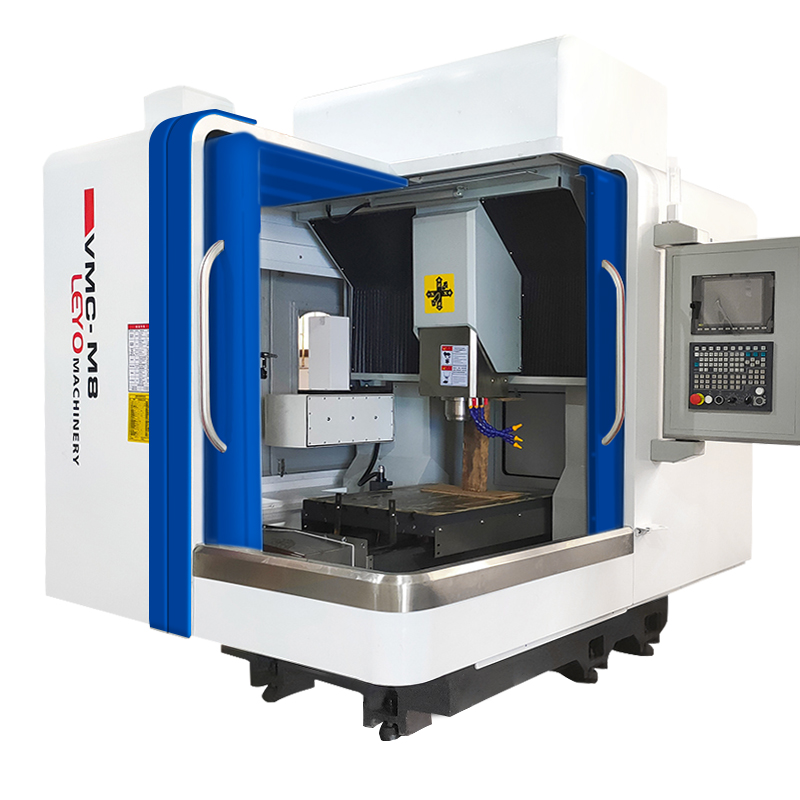
Evaluating the Horizontal Machining Center for Your Production Floor
Solution Categories/Approaches: Part Geometry and Complexity
Certain part geometries inherently demand horizontal machining. Multi-sided tombstone fixtures allow operators to mount multiple parts on a single column, presenting three or four sides of each part to the spindle without refixturing. Deep-cavity aerospace components, which act like buckets catching chips in a vertical setup, drain perfectly in a horizontal orientation. Large-scale machining projects and heavy engine blocks also benefit massively from this approach.
Implementing a horizontal machining center transforms how these complex parts are processed. Instead of constantly stopping the machine to clear deep bores in an engine block, the horizontal spindle bores through the material while gravity handles the waste. This capability makes horizontal setups the definitive choice for complex, multi-sided geometries where chip trapping would otherwise dictate the entire machining strategy. You can program aggressive roughing passes without fear of packing a cavity so tightly that it stalls the machine.
Tooling Considerations for Horizontal Setups
Tooling choices change when gravity works in your favor. High helix end mills feature aggressive flute angles designed to pull chips up and out of a cut rapidly. They promote highly efficient chip evacuation and leave an excellent part finish. However, this aggressive pulling action inherently increases axial forces, which can lead to severe tool deflection or even pull the tool out of the holder if the machine lacks rigidity. A 45-degree or 50-degree helix angle generates significant upward pull on the tool shank.
The superior structural rigidity of a horizontal machine counteracts these deflection risks. The massive cast-iron columns and robust spindle designs absorb the increased axial forces generated by high helix tools. Operators can fully leverage these aggressive solid round tools to maximize material removal rates. The machine holds the tool dead-center, allowing the high helix geometry to eject chips horizontally into free space without compromising dimensional accuracy. You can utilize shrink-fit tool holders to further secure the end mill against these high axial loads.
Scalability: Integrating a Pallet Change Horizontal Mill
Scalability in modern manufacturing relies on keeping the spindle turning. Integrating a pallet change horizontal mill leverages the inherent chip evacuation advantages into continuous, lights-out manufacturing. When chip clearing is no longer a bottleneck, the machine can run unattended for hours, drastically increasing your overall equipment effectiveness.
The workflow becomes highly optimized. An operator loads and unloads raw material on one pallet outside the machining envelope. Meanwhile, the machine aggressively cuts and evacuates chips on the other pallet inside the enclosure. Once the cycle finishes, the pallets swap in seconds. Because gravity ensures the fixtures and parts remain free of packed chips, the automated pallet change occurs smoothly without debris interfering with the seating surfaces or clamping mechanisms. This eliminates the risk of a misaligned pallet causing a catastrophic crash during a tool change.
To maximize the efficiency of a palletized horizontal setup, follow these fixturing steps:
Design tombstone fixtures with open channels that allow chips to flow downward without obstruction.
Mount parts as close to the center of the pallet rotation as possible to minimize unnecessary machine travel.
Utilize hydraulic or pneumatic workholding to ensure consistent clamping force across all parts on the tombstone.
Program a high-pressure coolant washdown at the end of the cycle to clear any residual dust before the pallet swaps.
ROI and Trade-Offs: Is a Horizontal CNC Milling Machine Worth the Investment?
Overall Value Influencing Factors (Conceptual Trade-offs)
Evaluating the return on investment requires comparing the higher upfront capital expenditure against long-term operational savings. A horizontal CNC milling machine requires a larger initial investment than a standard vertical mill. However, this cost is rapidly offset by dramatic reductions in cycle times, significantly lower tool replacement costs, and decreased scrap rates resulting from superior surface finishes.
The true financial advantage lies in the throughput multiplier. Tombstone fixturing allows for multiple parts to be machined per cycle. Instead of cutting one part at a time, a horizontal machine might process eight, twelve, or sixteen parts on a single tombstone. This multiplies the efficiency gains of better chip evacuation across a high volume of parts, delivering consistent quality and slashing the cost-per-part metric. You are essentially getting the output of three vertical mills from a single horizontal spindle.
Table: Vertical vs Horizontal Production Metrics
| Production Metric | Standard Vertical Mill | Horizontal Mill with Pallet Changer |
|---|---|---|
| Spindle Uptime | Typically 30% to 40% due to manual loading and chip clearing. | Often exceeds 85% due to offline loading and automated cycles. |
| Parts per Cycle | Usually 1 to 2 parts depending on vise configuration. | 8 to 16+ parts utilizing multi-sided tombstone fixtures. |
| Operator Dependency | High; requires constant monitoring and manual intervention. | Low; supports unattended, lights-out manufacturing shifts. |
| Tool Wear Rate | Accelerated due to frequent chip recutting and heat buildup. | Minimized due to consistent chip evacuation and thermal control. |
Implementation Risks and Mitigation: Infrastructure Requirements
Horizontal machines demand careful facility planning. They have a larger footprint and often require heavier, reinforced concrete foundations to support the massive machine weight and the dynamic forces of rapid pallet changes. Placing a heavy horizontal machine on a thin shop floor can lead to machine settling and severe alignment issues over time. A machine that shifts out of level will lose its geometric accuracy, causing parts to fail inspection.
To mitigate this risk, production managers must conduct a floor-space ROI analysis rather than a simple footprint comparison. While the machine takes up more physical space, its ability to replace two or three vertical mills means the revenue generated per square foot actually increases. Proper foundation pouring, often requiring a 12-inch reinforced concrete pad, and professional machine leveling are non-negotiable steps to ensure the equipment performs to its structural potential.
Implementation Risks and Mitigation: Setup and Programming Complexity
Transitioning to horizontal machining introduces a distinct learning curve. Programmers must adapt to tombstone fixturing, managing multiple work offsets, and generating complex 4-axis or 5-axis toolpaths. A programming error on a fully loaded tombstone can result in a catastrophic crash, destroying expensive fixtures, tooling, and the machine spindle. Managing tool clearances around a rotating tombstone requires meticulous attention to detail.
Mitigating this complexity requires investing in advanced CAM software simulation. Programmers must verify every toolpath, clearance plane, and pallet rotation in a virtual environment before sending G-code to the machine. Additionally, specialized operator training is mandatory. Operators must understand how to properly clean and torque tombstone fixtures, ensuring that no stray chips compromise the seating of the parts during the automated cycles.
Best Practices for Maximizing Chip Evacuation on Horizontal Mills
Optimizing Coolant Systems
Even with gravity assisting, optimizing coolant parameters remains vital for peak performance. Selecting the right coolant pressure (PSI) and volume (GPM) depends heavily on the material being machined. Stringy materials like aerospace aluminum require high volume to wash away the continuous ribbons of metal. Brittle materials like cast iron, which produce fine, abrasive dust, require high pressure to blast the grit out of the cutting zone before it acts as a lapping compound on the tool.
Through-spindle coolant (TSC) is an absolute necessity for deep-hole drilling and aggressive pocketing. TSC forces coolant directly through the center of the cutting tool, blasting out of the tip. This guarantees that chips are entirely flushed from the bottom of the cut, pushing them horizontally out of the part interior where gravity can pull them down into the conveyor. You should regularly inspect the coolant filters to ensure the TSC pump maintains maximum pressure during heavy roughing operations.
Toolpath Programming Strategies
Software strategies must complement the machine's physical orientation. Programmers should utilize climb milling wherever possible. Climb milling directs the cutting forces into the thickest part of the chip, tapering off to zero. This creates a clean chip that easily breaks and falls away, rather than rubbing and generating excess heat. Conventional milling tends to rub the material before cutting, which creates thin, stringy chips that are harder to evacuate.
Adaptive clearing toolpaths are highly effective on horizontal setups. These toolpaths maintain a constant radial chip load, preventing tool overload and ensuring a steady, manageable stream of chips. Programmers must avoid plunge cuts where possible. Plunging traps chips directly under the tool. Instead, use helical ramping or pre-drilled entry holes to maintain continuous chip flow and protect the fragile bottom edges of the end mills.
Before running a new program on a horizontal setup, programmers should verify the following checklist:
Confirm that all retract planes clear the maximum swing diameter of the fully loaded tombstone.
Verify that adaptive clearing toolpaths maintain a consistent radial engagement to prevent chip thinning.
Ensure that through-spindle coolant is activated specifically for deep drilling and pocketing cycles.
Check that helical entry angles do not exceed the manufacturer's recommendations for the specific end mill.
Simulate the entire pallet rotation sequence to guarantee zero interference between the tool holder and the fixture.
Conclusion
While vertical mills offer flexibility for simple, single-sided operations, the horizontal milling machine stands as the definitive choice for high-volume, large-scale, and complex part production. When chip evacuation dictates cycle time, cutting stability, and tool life, relying on gravity provides an unbeatable mechanical advantage. By removing chips instantly, horizontal setups protect tooling, ensure thermal stability, and guarantee pristine surface finishes.
Consider shortlisting a horizontal machine if your scrap rate exceeds acceptable margins due to poor surface finish, if you run high volumes of abrasive cast iron or gummy aluminum, or if your production goals require lights-out, palletized manufacturing. The shift from reactive chip clearing to proactive, physics-driven evacuation fundamentally transforms shop floor efficiency.
To move forward with optimizing your production capabilities, take the following steps:
Schedule a technical consultation with an application engineer to review your most problematic part geometries.
Request a comprehensive time-study to compare your current vertical cycle times against a horizontal tombstone setup.
Evaluate your facility's floor space and foundation specifications to prepare for a horizontal machine footprint.
Audit your current tooling inventory to ensure compatibility with high-speed, horizontal chip evacuation strategies.
FAQ
Q: How does a horizontal milling machine prevent chip recutting?
A: Gravity naturally pulls chips away from the cutting tool and workpiece. This prevents metal shavings from being trapped in pockets and struck again by the spindle. By keeping the cutting zone clear, the machine protects both the tool edges and the final product from mechanical damage.
Q: Why is chip evacuation critical for tool life in a horizontal CNC milling machine?
A: Trapped chips cause mechanical shock to cutting edges, which chips inserts or snaps solid round tools. They also retain intense heat that rapidly degrades tool coatings. Efficient evacuation removes this heat and physical interference, allowing tools to reach their maximum engineered lifespan.
Q: Can a pallet change horizontal mill run unattended?
A: Yes. Reliable, gravity-assisted chip evacuation combined with automated pallet changers enables safe, lights-out manufacturing. Because chips fall away naturally, there is no need for manual chip clearing or operator intervention between cycles, allowing continuous production.
Q: Do I need through-spindle coolant on a horizontal machining center?
A: While gravity provides a massive advantage, through-spindle coolant is still highly recommended. For deep-hole drilling and aggressive pocketing, TSC actively flushes chips completely out of the part interior, ensuring no debris remains trapped in blind features.
Q: How does chip evacuation affect surface finish in horizontal milling?
A: Clearing chips prevents them from dragging across the freshly machined surface. This avoids scratches, gouges, and poor Ra readings. Consistent chip removal ensures the tool only cuts parent material, resulting in a smooth, high-quality finish every time.
Q: Are high helix end mills better for horizontal milling?
A: High helix tools pull chips out efficiently, which pairs perfectly with horizontal setups. While they can be subject to increased deflection, the inherent structural rigidity of a horizontal machining center easily handles the increased axial forces, resulting in excellent part finishes.
Related Articles
-
 Dear Customers and Business Partners,In order to strictly comply with national export control laws and regulations, and to fulfill international obligations, ensuring that our exported CNC milling machines and CNC lathes are fully legal and compliant, we hereby notify you of the relevant policies coCompany News
 -
 Eliminate part deflection and chatter. Master expert workholding strategies for vertical milling machines to maximize CNC precision and reduce scrap.Product news
 -
 Stop tool breakage and scrap parts. Discover how horizontal milling machines use gravity for flawless chip evacuation and maximum ROI.Product news


