



Discrete manufacturing hides a massive profitability drain on the shop floor: spindle idle time. Every minute a machine sits waiting for an operator to load a part, dial in a fixture, or inspect a feature is a minute of lost revenue. Machining complex parts traditionally requires moving workpieces between different machines. This fragmented approach creates severe fixture bottlenecks, introduces tolerance stacking errors, and inflates labor costs. Shop owners and production managers face a technical evaluation. Does investing in a combined machine architecture yield a higher return on investment through immediate setup reduction? Or does a traditional floor layout utilizing separate machines offer better scalability and risk mitigation? We need to evaluate whether combining these processes optimizes spindle utilization better than keeping them apart. The right choice depends on your production volume, part complexity, and facility constraints.
Key Takeaways
Utilization Discrepancy: Industry baselines show traditional VMCs average 25% spindle utilization due to setup downtime, whereas HMCs can achieve up to 85% utilization. Translated to a standard 8-hour shift, an HMC cuts for 6.8 hours while a VMC cuts for merely 2 hours.
The Hybrid Advantage: A combined vertical horizontal CNC machine enables five-sided machining in a single setup, drastically reducing fixture costs and part-handling time.
Capital vs. Operational Expense: While separate VMCs offer lower upfront costs, the long-term operational costs of multiple setups often eclipse the initial CapEx of a hybrid or dedicated HMC system.
Facility Constraints: Floor space, operator programming expertise, and chip evacuation physics dictate the viability of combining versus separating machining processes.
The Setup Time Dilemma: Defining Success Criteria for Machining Centers
Understanding the true cost of a setup requires looking beyond the simple act of clamping a part. A complete setup encompasses teardown of the previous job, fixture alignment, tool loading, and first-article inspection. Consider the mechanics of a standard vise setup. The operator cleans the table, stones the surface to remove burrs, bolts down the vise, and sweeps the solid jaw with a dial indicator to ensure it is perfectly parallel to the machine axis. This process alone consumes valuable time. If the job requires custom soft jaws, add another hour to mill the profile. During this entire sequence, the spindle remains idle. Idle spindles generate zero revenue. When operators spend hours dialing in vises or indicating rotary tables, production stalls. The goal is maximizing the time the cutting tool actually engages the material. Achieving significant CNC setup reduction directly correlates to higher profitability and faster part delivery.
Moving a part from one machine to another introduces compounding geometric errors known as tolerance stacking. Every time you unclamp a workpiece, you lose your original datum reference. Re-clamping the part on a secondary machine requires establishing a new zero point. Even the most precise probing cycles and high-quality zero-point clamping systems carry microscopic deviations. When a part requires three or four separate operations across multiple machines, these tiny deviations stack up. Eventually, the final feature may fall out of tolerance relative to the first feature. Keeping the part clamped in a single fixture eliminates this risk entirely.
Evaluating machine tool success requires strict metrics. You cannot measure success merely by looking at the initial machine purchase price. Instead, establish baselines using spindle run-time percentage, cost-per-part, and floor-to-floor cycle time. Floor-to-floor time measures the total duration from picking up raw stock to setting down a finished part. This metric exposes the hidden delays of part handling and staging. By focusing on spindle utilization and cycle times, you gain a realistic picture of how different machine architectures perform in a real-world production environment.
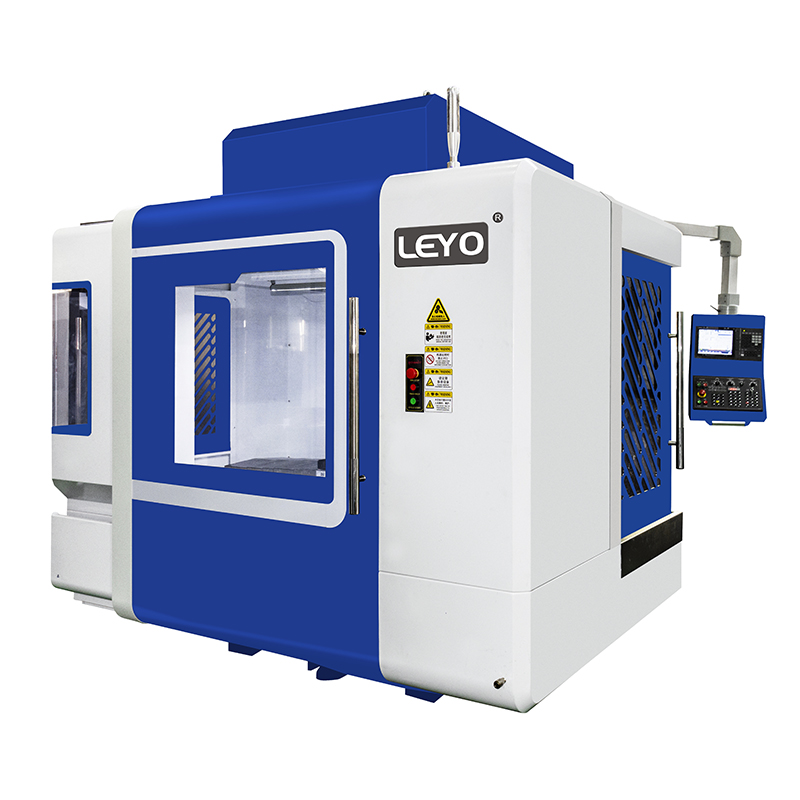
Evaluating the Combined Vertical Horizontal Machining Center
A combined vertical horizontal machining center merges two distinct cutting orientations into a single platform. This architecture typically utilizes an articulating spindle head or a universal trunnion table. The articulating head physically rotates to approach the workpiece from above or from the side. Alternatively, a trunnion table tilts and rotates the workpiece to present different faces to a fixed spindle. Both designs aim to consolidate operations. They allow the machine to perform heavy roughing and intricate finishing without requiring the operator to open the doors and handle the part.
The primary capability driving this architecture is five-sided machining. Accessing five sides of a prismatic part in one clamping eliminates secondary and tertiary setups. You load the raw block once. The machine mills the top, then rotates the head or table to drill and tap the four sides. This done-in-one approach drastically reduces fixture consolidation. Instead of buying or building three separate workholding solutions, you only need one. This capability shrinks the physical footprint of your tooling inventory and simplifies job scheduling.
Let us look at the mechanics of an articulating head. These heads often use a pivot that swings 90 degrees or more. When locked into the vertical position, it functions like a standard mill. When swung horizontally, it can bore deep holes into the sides of a transmission housing. This flexibility is unmatched. However, implementation realities require careful consideration. These hybrid machines carry a high initial capital expenditure. The internal mechanics are highly complex. Kinematic complexity introduces potential rigidity trade-offs compared to dedicated single-spindle-orientation machines.
An articulating head contains multiple pivot points, bearings, and gears. While highly accurate, it may not absorb heavy interrupted cuts as effectively as a massive, fixed horizontal spindle casting. If you are hogging out pre-hardened 4140 steel or Inconel, the vibration can transfer through the pivot joints, potentially causing chatter or premature tool wear. You must weigh the massive gains in setup reduction against the potential limitations in raw material removal rates for exotic alloys. For aluminum and mild steel, the rigidity is rarely an issue.
Evaluating Separate Vertical and Horizontal Machining Centers
Many facilities rely on a traditional split-floor strategy. They route roughing or simple work to vertical machines and send complex or high-production work to horizontal machines. This approach leverages the specific strengths of each platform. It keeps capital costs manageable while maintaining a steady flow of work. However, it also creates logistical friction. Managing two distinct machine types requires balancing workloads, staging inventory, and ensuring operators are available to move parts between departments.
The traditional vertical machining center remains a staple in job shops. It offers high affordability, ease of maintenance, and a smaller footprint. VMCs excel at machining simpler geometries and flat plates. Operators find them accessible and easy to set up for quick, one-off jobs. The work envelope is right in front of the operator, making it easy to indicate a vise or sweep a bore. Tool changes are straightforward, and standard tooling is ubiquitous and inexpensive.
However, the limitations are severe for complex parts. The spindle plunges down from above. Chips accumulate inside pockets and deep cavities. Operators must manually intervene to flip parts for secondary operations. If you are cutting a deep pocket in a block of aluminum, the chips have nowhere to go. They sit in the pocket. The cutter recuts those chips, which destroys surface finish and snaps endmills. You have to blast high-pressure coolant or air to clear the zone, which is messy and inefficient. This constant manual intervention leads directly to the industry benchmark of roughly 25% spindle utilization.
Conversely, the horizontal machining center dominates high-volume production. HMCs utilize tombstone fixturing, allowing operators to mount multiple parts on a single column. Integrated pallet pools allow operators to load raw stock outside the machine while the spindle cuts parts inside. This parallel processing drives spindle uptime toward 85%. You can load a tombstone with sixteen different parts, hit cycle start, and walk away.
Furthermore, the physics of chip evacuation heavily favor horizontal cutting. Gravity pulls chips away from the workpiece naturally. When you bore a hole horizontally, the chips fall out. This prevents chip recutting, extends tool life, and allows the machine to run faster and longer than a vertical counterpart. You can push feed rates higher because you are not worried about chip packing.
Workflow bottlenecks inevitably arise when routing parts between separate machines. You must map the logistical friction of scheduling, staging, and moving work-in-progress inventory. A part finished on a vertical machine cannot immediately enter the horizontal machine if that machine is running another job. The part sits on a cart. It waits. This waiting time inflates lead times and ties up cash in unfinished goods. Managing this flow requires robust ERP systems and precise shop floor coordination.
Head-to-Head Evaluation: Features-to-Outcomes
Comparing these architectures requires looking at how machine features translate into tangible production outcomes. The decision impacts every aspect of the shop floor, from operator training to facility layout.
| Evaluation Metric | Combined Hybrid Machine | Separate VMC + HMC Combo |
|---|---|---|
| Initial Investment | High single-machine capital expenditure. | Split investment across two separate assets. |
| Spindle Utilization | Very high due to single-setup processing. | VMC low (~25%), HMC high (~85%). |
| Setup Time | Minimal. Done-in-one capability. | High. Requires multiple teardowns and alignments. |
| Maintenance Complexity | High. Complex articulating heads or trunnions. | Moderate. Standardized components across two machines. |
| Part Handling | Low. Operator loads once, unloads once. | High. Constant moving of WIP between stations. |
| Chip Evacuation | Variable depending on head orientation. | Poor on VMC, excellent on HMC. |
Setup time and part handling represent the most significant operational differences. A vertical horizontal CNC machine thrives on the done-in-one philosophy. You eliminate the manual intervention required to unclamp, clean, flip, and re-clamp the workpiece. In a separate routing scenario, the operator must physically move the part from the VMC to the HMC. They must clean the fixture, load the part, indicate it, and run a first-article inspection again. This manual intervention introduces human error and halts production.
Footprint and facility requirements also dictate machine selection. A combined machine requires a larger footprint than a single vertical machine. However, it generally consumes less total floor space than housing both a vertical and a horizontal machine simultaneously. You must also account for the staging areas required for separate machines. Carts holding work-in-progress inventory take up valuable square footage. Consolidating operations into one machine clears the aisles and improves overall facility flow.
Scalability and automation integration differ between the two approaches. Dedicated horizontal machines integrate seamlessly with massive flexible manufacturing systems and multi-pallet pools. They are built for lights-out manufacturing. Combined hybrid machines can also utilize pallet changers, but their complex kinematics sometimes make robotic machine tending more challenging. You must evaluate how easily each configuration adapts to your long-term automation strategy.
Implementation Risks and Mitigation
Adopting advanced machining architectures introduces specific risks. Programming complexity represents a major hurdle. Safely programming a machine with articulating heads or complex trunnions requires advanced CAM software and flawless post-processors. Standard 3-axis programming techniques do not apply. Programmers must manage tool vectors, rotary axis limits, and complex clearance planes. The operator expertise needed to run these programs is significantly higher. A crash on a multi-axis hybrid machine is catastrophic and incredibly expensive to repair. You cannot simply jog the machine away if a tool is buried in a part at a compound angle.
Maintenance and single-point-of-failure risks must be evaluated. If a combined hybrid machine goes down, all production for that specific part halts immediately. You lose your roughing and finishing capabilities simultaneously. Contrast this with the redundancy of having separate machines. If one vertical machine breaks, you can often route the work to another vertical machine on the floor. Furthermore, maintaining standard vertical machines is straightforward. Servicing articulating hybrid heads requires specialized technicians and expensive replacement cartridges.
Mitigation strategies ensure smooth implementation. Cross-training operators is non-negotiable. Do not rely on a single setup technician to understand the complex kinematics of your new machine. Invest heavily in advanced toolpath simulation software. Simulation catches collisions in the digital environment before they destroy physical spindles. Establish robust preventative maintenance schedules. Check trunnion alignments and rotary axis backlash regularly to maintain the geometric accuracy required for multi-sided machining.
Decision Framework: Aligning Machine Architecture with Production Models
High-mix, low-volume environments and job shops face unique challenges. They rarely run the same part for weeks at a time. They switch jobs daily or even hourly. In these environments, flexibility and rapid changeover are paramount. The ability to drop a block of material into a machine and hit five sides without building custom fixtures justifies the cost of a combined hybrid machine. The setup reduction directly translates to getting more diverse jobs out the door every week.
High-volume, low-mix production requires a different approach. When you manufacture thousands of identical components, raw material removal rates and absolute reliability dictate success. Dedicated horizontal machines remain the standard for continuous production runs. Their massive castings provide superior rigidity. Their gravity-assisted chip management prevents recutting during heavy roughing. In these scenarios, vertical machines perfectly support the horizontal lines by handling simple secondary operations or preparing raw stock before it enters the automated pallet pool.
Conclusion
Conduct a time-study on your top ten most frequently machined parts to calculate current setup costs versus projected hybrid cycle times.
Request physical test cuts from machine tool builders using your specific part material and geometry to verify rigidity.
Demand detailed CAM simulations from the manufacturer to confirm clearance, reach, and true cycle times before purchase.
Perform a spindle utilization audit on your current shop floor to identify exact bottleneck locations.
Evaluate your current CAM software capabilities and programmer skill levels to ensure readiness for multi-axis toolpaths.
FAQ
Q: What is the main difference between a vertical and horizontal machining center?
A: The fundamental difference is spindle orientation. A vertical machine plunges the cutting tool down from above, while a horizontal machine cuts from the side. This orientation heavily impacts chip evacuation, as gravity pulls chips away from horizontal cuts. It also dictates fixturing styles, with horizontal machines utilizing multi-sided tombstones for higher throughput.
Q: How does a vertical horizontal CNC machine achieve five-sided machining?
A: These machines utilize articulating spindle heads, rotary tables, or universal trunnions. These mechanisms manipulate either the workpiece or the spindle itself. By rotating the part or tilting the cutting tool, the machine can access the top and all four sides of a prismatic block without requiring the operator to unclamp and reposition the material.
Q: Why is VMC spindle utilization typically lower than HMC utilization?
A: Vertical machines require significant manual setup time and operator intervention. Operators must stop the machine to clean chips, unclamp the part, flip it, and re-indicate the fixture for secondary operations. They also lack standard integrated pallet changers. This constant stopping results in roughly two hours of actual cutting time per eight-hour shift.
Q: Does a vertical horizontal machining center save floor space?
A: Yes, in a consolidated workflow. While a single hybrid machine is generally larger than a standard vertical machine, it requires less total footprint than housing both a vertical and a horizontal machine. It also eliminates the need for large staging areas and carts used to hold work-in-progress inventory between separate machines.
Q: Which machine configuration offers the best CNC setup reduction?
A: Combined hybrid machines offer the highest setup reduction per individual complex part by enabling done-in-one processing. However, dedicated horizontal machines offer the best setup reduction across large, high-volume batches because operators can load dozens of parts onto tombstone fixtures outside the machine while the spindle continues cutting.
Related Articles
-
 Dear Customers and Business Partners,In order to strictly comply with national export control laws and regulations, and to fulfill international obligations, ensuring that our exported CNC milling machines and CNC lathes are fully legal and compliant, we hereby notify you of the relevant policies coCompany News
-
 Abrasive graphite dust destroys standard CNCs. Learn why specialized dust-proof machines and proper wet or dry milling methods are essential for safe EDM electrode production.Product news
-
 Drill tap centers deliver high-speed threading for high-volume production. Understanding spindle torque limits prevents costly tool breakage and optimizes machine cycle times.Product news


