



Precision machining environments constantly battle secondary operation bottlenecks. Manual part handling between machines creates excessive Work in Progress (WIP) and introduces unacceptable chucking errors. Labor shortages further expose these traditional manufacturing flaws. Routing complex parts across multiple single-operation lathes and mills is inefficient, and extended cycle times directly erode profit margins. The industry is rapidly shifting toward "done-in-one" processing. Implementing a double spindle CNC turning milling center eliminates manual interventions. This evaluation goes beyond a simple machine purchase. It represents a strategic overhaul of shop floor routing, labor allocation, and quality control. You will learn how to optimize spindle utilization, balance roughing and finishing passes, and reduce setup times. We break down the mechanical architecture, analyze production viability, and outline exact implementation strategies to ensure a profitable transition on the shop floor.
Key Takeaways
Done-in-One Efficiency: Eliminating secondary setups reduces tolerance stacking and drastically cuts overall cycle times for complex, multi-sided parts.
Process Balancing: Maximizing ROI requires strategically balancing roughing and finishing operations between the main and sub spindles to ensure neither spindle sits idle.
Labor and Automation: Dual-spindle architectures enable unattended or lightly attended machining, maximizing output per operator and facilitating lights-out shifts.
CapEx vs. OpEx: While initial capital expenditure is higher than standard lathes, the consolidation of floor space, reduction in WIP, and lower scrap rates typically yield a 12- to 18-month ROI for high-mix/medium-volume facilities.
Implementation Reality: Success requires advanced CAM software capabilities, multi-path control processing, and upskilled programmers to manage spindle synchronization and collision avoidance.
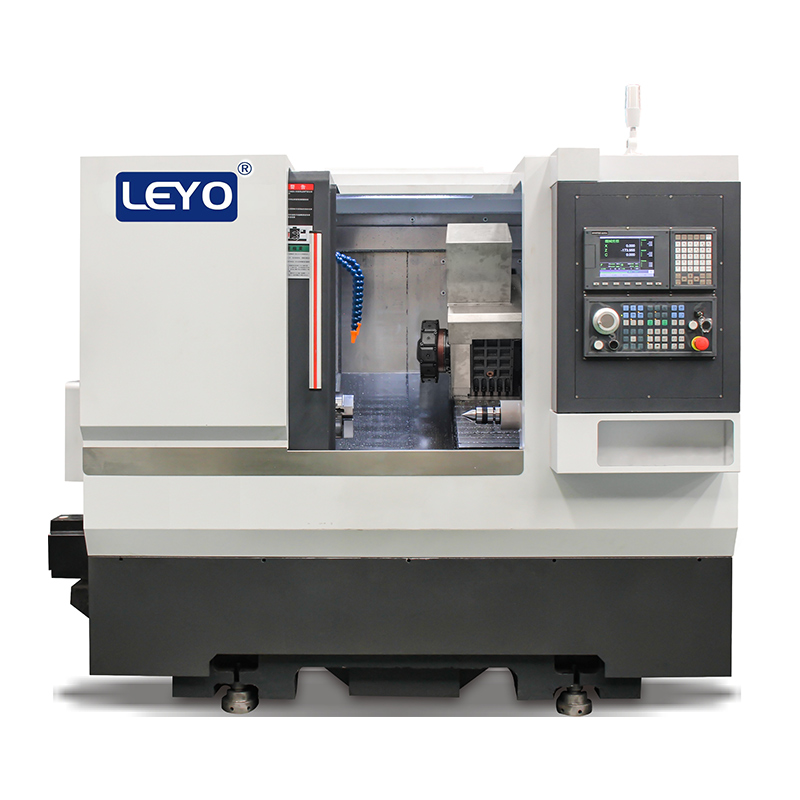
Defining the Architecture: What Separates a Double Spindle CNC Turning Milling Center?
Main vs. Sub Spindle Dynamics and Power Disparities
Dual-spindle machines rely on seamless mechanical handoffs to maintain continuous production. The main spindle executes the primary heavy roughing operations, hogging out material from the raw bar stock. Once the front-end features are complete, the machine transfers the part dynamically. A sub spindle CNC machine allows work on the back of the part entirely without human intervention. Both spindles synchronize their RPM and phase orientation precisely before the sub spindle chuck advances and clamps the material. A cutoff tool then separates the part from the main bar. Power disparities between the two spindles dictate how you route operations. The main spindle typically features higher horsepower, more torque, and a larger chuck diameter. The sub spindle usually utilizes a smaller chuck and lower horsepower motor designed for lighter finishing cuts. Programmers must respect these torque limits. You route heavy drilling and aggressive roughing to the main spindle, while reserving light profiling, chamfering, and back-boring for the sub spindle.
Live Tooling and Milling Integration
Standard turning centers fail when presented with complex prismatic features. Live tooling integration changes this dynamic completely. A Y axis CNC lathe configuration is necessary within the dual-spindle setup to handle true milling tasks. The Y-axis allows the cutting tool to move perpendicular to the turning centerline. This mechanical capability enables off-center milling, cross-drilling, and rigid tapping. It elevates the machine from a simple lathe to a highly capable milling center. Operators machine flats, hexes, and complex pockets directly on the turned part. You eliminate the need to move the component to a vertical machining center for secondary operations. Driven tools mount directly into the turret stations using BMT or VDI interfaces. Internal gearing transmits power from a dedicated servo motor to spin the endmills and drills at high speeds.
Kinematic Complexity and Rigidity
Simultaneous machining generates massive cutting forces that threaten dimensional accuracy. Structural rigidity dictates whether the machine can hold tight tolerances during heavy cuts. Machine builders utilize different guideway constructions based on the intended application. Box way construction offers superior vibration damping and rigidity. You want box ways for heavy interrupted cuts on tough alloys like Inconel or 4140 steel. Linear guide construction provides significantly faster rapid traverse rates. You specify linear guides for high-speed machining of aluminum, brass, and plastics. The machine bed itself must absorb harmonic vibrations. Vibration transfer between the two spindles causes chatter and poor surface finishes. A massive, heavily ribbed cast iron bed prevents this harmonic resonance from destroying your tool life.
Multi-Path Control Systems
Operating two spindles and multiple turrets simultaneously requires immense processing power. Standard single-path CNC controls crash when faced with this complexity. Advanced multi-path controllers are absolutely essential for safe operation. Systems from Fanuc, Siemens, or proprietary conversational platforms manage the heavy lifting. They process dual-path or multi-path programs simultaneously without any processing lag. The control reads ahead dozens of blocks of G-code to anticipate movements. It coordinates wait codes (often M100-series commands) to synchronize turret movements and spindle handoffs. This synchronization prevents catastrophic collisions between moving components in a highly constrained work envelope. Multi-path controls ensure both spindles operate efficiently, keeping tools in the cut rather than waiting in clearance planes.
Success Criteria: When Does the Transition Make Financial Sense?
Part Complexity and Tolerance Requirements
Manual part flipping introduces inherent inaccuracies that ruin tight-tolerance jobs. Chucking errors compound with every secondary setup you perform. There is a distinct threshold where manual handling fails to meet print specifications. Unacceptable concentricity or runout errors dictate an immediate process change. Automated spindle-to-spindle part transfer eliminates human-induced tolerance stacking entirely. The part remains clamped on its rotational axis during the handoff between the main and sub spindle. This guarantees near-perfect concentricity between the front and back features. Tight geometric dimensioning and tolerancing (GD&T) requirements demand this level of rigid control. You maintain true position and cylindricity effortlessly without relying on an operator to seat the part perfectly in soft jaws.
Industry-Specific Viability
Certain manufacturing sectors cannot compromise on part accuracy or surface finish. Medical device manufacturing relies heavily on these advanced machines. Bone screws, dental abutments, and titanium implants require complex multi-axis contours machined in a single setup. Aerospace components like complex fluid fittings and hydraulic spools demand flawless surface finishes free of blending marks. Automotive transmission shafts require deep hole drilling, tight splines, and hardened bearing journals. In these demanding sectors, a twin spindle turning center is practically mandatory. It is the only reliable way to meet strict GD&T callouts consistently across thousands of parts. These industries justify the heavy capital investment through massive scrap reduction and guaranteed part compliance.
Production Volume and Mix
Finding the production sweet spot ensures you maximize your return on investment. High-mix, low-volume environments benefit from massive setup reductions. You stop building custom soft jaws and dedicated fixtures for secondary mills. You simply change the collets, load the new program, and start cutting. Medium-to-high volume environments benefit from drastic cycle time reductions. Operations overlap between the two spindles, effectively halving the time it takes to drop a finished part. Contrast this with simpler, rotationally symmetric geometries. A standard double spindle CNC lathe without live milling capabilities might suffice for basic pins and bushings. If the part lacks flats, hexes, or off-center holes, you skip the expensive milling options. Match the machine capabilities directly to your historical part mix to avoid over-purchasing.
Floor Space and Machine Consolidation
Shop floor real estate is a premium asset that you must optimize. Traditional routing requires a standalone lathe, a vertical machining center (VMC), and staging tables between them. This disjointed setup consumes massive amounts of square footage and creates physical bottlenecks. Replacing this multi-machine cell with a single turn-mill offers a huge footprint advantage. You reclaim valuable floor space for other revenue-generating activities or assembly stations. Material flow becomes streamlined and highly predictable. Work in progress no longer sits in plastic bins waiting days for the next operation.
| Production Metric | Traditional Setup (Lathe + VMC) | Double Spindle Turn Mill |
|---|---|---|
| Floor Space Required | High (Multiple machines + staging areas) | Low (Single compact footprint) |
| WIP Inventory | High (Parts queue between machines) | Zero (Raw material in, finished part out) |
| Setup Time | Extended (Multiple fixtures, probing, and zeros) | Minimal (Single setup for all operations) |
| Concentricity Control | Poor (Relies on manual re-chucking accuracy) | Excellent (Automated spindle handoff) |
| Labor Requirement | High (Multiple operators or constant attention) | Low (Supports unattended lights-out running) |
Feature-to-Outcome Evaluation: Maximizing the Dual Spindle Turn Mill
Simultaneous Machining (Pinch Turning & Milling)
Advanced programming unlocks the true metal-removal potential of these machines. Upper and lower turrets work on both spindles simultaneously to slash cycle times. Pinch turning is a prime example of simultaneous machining efficiency. Two turning tools engage the same diameter exactly opposite each other. One tool roughs the profile while the other finishes it slightly behind. This balances the cutting forces, prevents part deflection on long shafts, and doubles the feed rate. A dual spindle turn mill excels at this aggressive technique. The primary outcome is a 40 to 50 percent reduction in actual in-cut cycle times. You keep both spindles under load constantly.
Unattended Machining and Part Handling Integration
Automation transforms a standalone machine into a continuous production cell. Bar feeders push raw material through the main spindle automatically after every cutoff cycle. Gantry loaders handle larger billets or heavy castings that exceed bar capacity. Finished parts exit the work envelope via through-spindle ejection or automated parts catchers. Conveyors transport the completed components out of the machine and into collection bins. This integration enables true lights-out manufacturing shifts. The machine runs continuously overnight without any human intervention. You successfully decouple machine pacing from operator availability, scaling your output dramatically without adding labor headcount.
Tooling Capacity and Setup Reduction
High-mix environments require extensive tooling flexibility to remain profitable. Standard 12-station turrets often lack the necessary tool capacity for complex jobs. High-capacity automatic tool changers (ATC) or multi-station turrets with half-index capabilities solve this problem. You mount dozens of cutting tools simultaneously, including redundant sister tools for high-wear operations. The outcome is leaving standard roughers, finishers, drills, and taps resident in the machine permanently. You do not tear down setups between disparate jobs. You simply call up a new program, change the workholding collets, and press cycle start. Changeover times drop from several hours to mere minutes.
High-Pressure Coolant and Chip Management
Aggressive machining generates massive volumes of chips that can halt production. A crowded dual-spindle work envelope traps these chips easily between the turrets and chucks. Standard flood coolant lacks the velocity to clear the cutting zone effectively. High-pressure coolant systems operating at 1,000+ PSI are necessary for reliable operation. They blast chips away from the tool edge instantly, breaking stringy materials into manageable pieces. Programmable chip conveyors evacuate the material from the machine bed continuously. Reliable chip evacuation prevents catastrophic tool breakage during deep hole drilling. It also prevents chips from wrapping around the part and scoring the surface finish.
Overall Value Influencing Factors: Conceptual Trade-Offs
Initial CapEx vs. Long-Term Operational Economics
Advanced turn-mill centers require a significant initial capital expenditure. The purchase price of one fully optioned machine with a bar feeder and high-pressure coolant is substantial. You must compare this against the economics of traditional manufacturing cells. Calculate the combined cost of two standard machines, robotic automation, and the extra floor space required. The single turn-mill often presents a lower upfront cost than a fully automated multi-machine cell. Operational expenses drop significantly over the machine's lifespan. You eliminate custom fixture costs entirely. Scrap rates plummet due to automated part handling and reduced human error. Labor costs decrease as one operator manages multiple automated turn-mill cells simultaneously.
Maintenance and Energy Consumption
Consolidating equipment streamlines your facility management and reduces overhead. You only maintain one preventative maintenance schedule instead of tracking multiple assets. Coolant management becomes centralized and much easier to monitor. You only replace filters, skim tramp oil, and top off fluids for one large sump. Power draw is consolidated into a single asset. Running one large main spindle motor is often more efficient than running three separate machines simultaneously. Modern spindle drives regenerate power back into the electrical system during rapid deceleration. This regenerative capability reduces the overall electrical footprint of your manufacturing floor.
Flexibility vs. Redundancy
Consolidation introduces specific operational risks that you must manage. The single point of failure is a valid concern for production managers. If the complex turn-mill goes down due to a spindle crash or drive failure, production stops entirely. Two separate machines offer partial redundancy during breakdowns. You can still turn parts on the lathe even if the mill is down for repairs. However, the extreme flexibility of a turn-mill usually outweighs this redundancy risk. You pivot instantly between vastly different part geometries to meet shifting customer demands. Preventative maintenance and robust dealer support mitigate the downtime risks effectively. Stocking critical spare parts in-house further protects your production schedule.
Implementation Risks and Mitigation Strategies
Programming Complexity and CAM Software
Programming these machines manually at the control is nearly impossible and highly prone to error. Standard 2-axis lathe CAM packages cannot handle the kinematic complexity of multiple turrets. They fail completely at spindle synchronization, wait codes, and pinch turning. Y-axis milling paths require sophisticated software generation to avoid gouging the part. This programming hurdle is a major implementation risk. The mitigation strategy involves budgeting for advanced CAM software upgrades immediately. Packages like Esprit or Mastercam Mill-Turn are industry standards for a reason. You must also invest in post-processor customization prior to machine delivery. A flawless post-processor translates the CAM paths into perfect, crash-free G-code.
Work Envelope Crowding and Tool Interference
The physical space inside a dual spindle turn mill is highly constrained. Multiple turrets, spindles, parts catchers, and tool probes share a very small volume. This crowding increases the risk of catastrophic collisions during rapid movements. Turrets crash into chucks easily if clearance planes are ignored. Tools interfere with each other or strike the sheet metal enclosures. Specifying compact live tool holders mitigates this physical risk. Utilizing short-projection tooling keeps the cutting edge close to the turret face. Mandating 3D machine simulation is absolutely critical for safe operation. Programmers verify all clearances virtually before cutting any metal on the floor.
Operator Skill Gap
Shop floor personnel face a steep learning curve when transitioning to these machines. Operators accustomed to standard 2-axis lathes struggle initially with the added axes. The operational complexity of multi-turret setups and dual spindles is intimidating. Recovering from an alarm state or a broken tool requires deep understanding of the machine kinematics. Investing in simulation software creates digital twins for offline prove-outs. Operators learn the machine behavior safely on a computer screen without risking a $500,000 asset. Mandating vendor-supplied training during commissioning is non-negotiable. Upskilling your workforce ensures you actually achieve the cycle times the machine is capable of hitting.
Thermal Deformation Management
Simultaneous heavy cutting generates massive amounts of heat inside the enclosure. This heat transfers directly into the machine casting and ballscrews. Thermal growth affects tight tolerances severely as the day progresses. A machine that cuts perfectly at 8:00 AM may cut out of tolerance by 2:00 PM. Specifying machines with active thermal compensation software helps mitigate this drift. The control adjusts offsets automatically based on strategically placed temperature sensors. Chiller units for spindles and ballscrews maintain a stable operating temperature regardless of the cutting load. Implementing rigorous warm-up cycles ensures the machine stabilizes thermally before running any production parts.
Conclusion
Request a turnkey time study from shortlisted vendors using your most difficult legacy part to verify actual cycle time reductions.
Demand a physical test cut at the dealer showroom to prove process stability, surface finish capabilities, and chip evacuation efficiency.
Audit your current CAM software capabilities and budget for necessary post-processor upgrades before the machine arrives on your floor.
Evaluate your shop floor layout to prepare for the consolidated footprint, automated bar feeder integration, and raw material staging.
FAQ
Q: What is the difference between a double spindle CNC lathe and a turning milling center?
A: A standard double spindle lathe primarily performs basic turning operations on both ends of a part. A turning milling center incorporates live tooling and usually features a Y or B axis. This allows for complex milling, off-center drilling, and tapping alongside standard turning.
Q: How does a Y axis CNC lathe improve dual spindle operations?
A: The Y axis allows the cutting tool to move perpendicular to the turning centerline. This enables true off-center milling and cross-drilling without relying solely on polar coordinate interpolation. This improves surface finish, dimensional accuracy, and tool life on both the main and sub spindles.
Q: What are the programming challenges of a twin spindle turning center?
A: Programming requires managing multi-path controls simultaneously. Programmers must use wait codes to synchronize turret movements. Spindle synchronization during the mechanical part handoff must be flawless. Collision avoidance between multiple turrets, tools, and spindles requires advanced CAM simulation software.
Q: Can a sub spindle CNC machine run unattended?
A: Yes, these machines excel at unattended operations. You pair the machine with a bar feeder and an automated parts catcher. High-pressure coolant ensures reliable chip evacuation. Tool life management software monitors insert wear. This combination enables continuous, lights-out production without operator intervention.
Q: Is a dual spindle turn mill worth the investment for low-volume production?
A: Yes. While high volume yields faster ROI through strict cycle time savings, low-volume shops benefit massively from reduced setup times. You eliminate the need to build custom workholding for secondary milling operations. Parts are finished in one setup, drastically reducing WIP and labor hours.
Related Articles
-
 Dear Customers and Business Partners,In order to strictly comply with national export control laws and regulations, and to fulfill international obligations, ensuring that our exported CNC milling machines and CNC lathes are fully legal and compliant, we hereby notify you of the relevant policies coCompany News
-
 Abrasive graphite dust destroys standard CNCs. Learn why specialized dust-proof machines and proper wet or dry milling methods are essential for safe EDM electrode production.Product news
-
 Drill tap centers deliver high-speed threading for high-volume production. Understanding spindle torque limits prevents costly tool breakage and optimizes machine cycle times.Product news


