



Are slow tool changes killing your profit margins? Small batch turning often suffers from agonizingly long setup times. This bottleneck makes conventional machines cost-prohibitive on a per-part basis. When you are running batches of 50 or 100 components, spending hours dialing in a complex machine is simply not an option. In this guide, we explore how a linear tooling setup completely solves this exact problem. It delivers blistering speed and tight precision without the massive overhead.
Key Takeaways
Zero Indexing Time: Gang tool configurations eliminate the mechanical rotation of a traditional turret. This reduces tool change intervals to mere fractions of a second.
Optimized for Small Batches: Simplified programming and rapid physical setups make these machines highly efficient. They remain consistently profitable for short-run manufacturing cycles.
High Precision and Low Maintenance: A dramatic reduction in moving parts translates directly to tighter machining tolerances. You get superior repeatability and minimized machine downtime.
Cost-Effective Alternative: For producing short and complex components, this equipment consistently delivers faster cycle times than sliding-headstock machines. It also requires a significantly lower initial capital investment.
What is a Gang Tool Lathe?
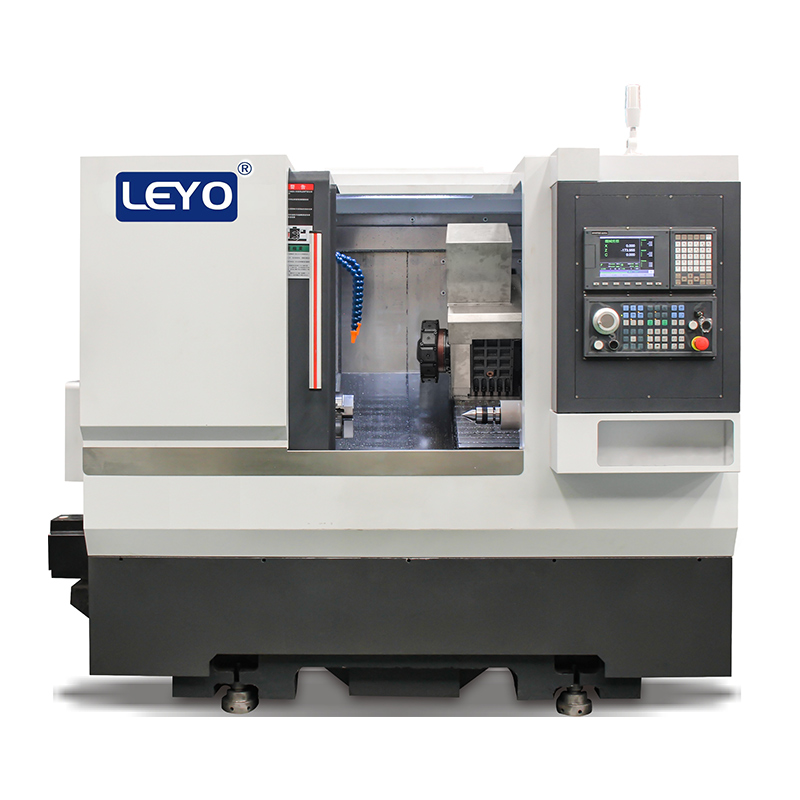
To optimize production workflows, shop owners must first grasp the mechanical principles differentiating various turning centers. A gang tool lathe is a highly specialized CNC machine engineered specifically to maximize efficiency in short-run production. Traditional lathes utilize a rotating, multi-station turret to index cutting tools. In contrast, a gang tool machine mounts all necessary cutting tools in a stationary, linear row. Machinists often refer to this row as a gang.
These tools are secured directly onto the machine cross-slide, moving along the X-axis. During the machining process, the main spindle securely holds and rotates the workpiece at high velocities. Instead of waiting for a heavy turret to retract, unclamp, rotate, and re-engage, the CNC control simply directs the cross-slide to shift linearly along the X and Z axes. This swift and direct motion brings the next required tool into contact with the material almost instantly.
The Anatomy of a Linear Tooling Setup
Understanding the physical architecture of a cnc gang tool system reveals why it dominates specific manufacturing environments. The core components prioritize absolute rigidity, speed, and operational simplicity.
The Tooling Block or T-Slot Table
The foundation of the tooling system is typically a flat, rigid T-slot table mounted on the cross-slide. Picture an operator sliding modular blocks directly onto this heavy cast-iron surface. This design offers unparalleled flexibility. Machinists can arrange turning tools, boring bars, drills, and threading tools in any sequence dictated by the specific part program. Because the tools sit in modular blocks, operators easily optimize the spacing to prevent tool interference. This ensures clear access to the workpiece regardless of the operation.
The High-Speed Spindle
Spindles on these machines are specifically engineered for high-speed capabilities. This is a critical requirement for miniature components. Smaller parts require higher RPMs to achieve the correct surface footage for optimal cutting. Consequently, these spindles often operate between 5,000 and 6,000 RPM. They feature low-inertia designs, allowing the motor to accelerate and brake aggressively between operations.
The Linear Guide Ways
Raw speed is useless without pinpoint accuracy. To support the rapid horizontal movements of the tooling block, these lathes utilize heavy-duty linear guide ways. These precision-ground rails provide exceptional stiffness and vibration damping. By mounting the tools directly over these rigid rails, the machine minimizes deflection during heavy cuts. The result is superior dimensional accuracy and extended insert life.
The Mechanics of Speed: How Gang Tooling Slashes Cycle Times
Cycle time is the heartbeat of shop profitability. If you are producing batches of 50 to 500 parts, saving even two seconds per part yields a massive compounding effect on daily throughput. The mechanical design of gang tooling inherently removes the most common bottlenecks associated with CNC turning.
Eliminating the Turret Index
The most significant time-saving factor is the complete elimination of turret indexing. Consider the physics of a conventional turret tool change. The machine must move the turret to a safe clearance position along the Z and X axes. The turret must then mechanically unclamp, rotate the heavy carousel to the next tool station, physically clamp back into position, and finally travel back to the workpiece. This clunky process typically takes between 1.5 to 3 seconds.
Building on absolute mechanical simplicity, a gang tool setup requires zero rotational indexing. All tools are already fixed in position on the X-axis. Changing tools simply requires the machine to slide horizontally to the next coordinate. This linear shift takes mere milliseconds. Over a part program requiring five tool changes, a gang machine easily shaves 10 to 15 seconds off the cycle time purely through faster transitions.
Shorter Axis Travel
Because there is no rotating carousel to cause clearance issues, tools on a gang slide sit incredibly close to the workpiece. Machinists set up the tool blocks so that the resting position of the next tool is merely millimeters away from the cutting zone. This optimized spacing drastically minimizes the rapid traverse distance the machine must cover. Less wasted movement translates directly to more time spent actively making chips.
Faster Spindle Acceleration and Deceleration
Small parts require frequent changes in spindle speed. This is especially true when transitioning from turning the outer diameter at high RPM to drilling the center at a lower RPM, or stopping completely for a part ejection. The spindles on gang machines possess significantly less rotational mass than the massive chucks found on heavy-duty turret lathes. This lower inertia allows the spindle motor to brake and accelerate in a fraction of the time, further compressing the overall cycle time.
Gang Tool Lathes vs. Turret Lathes: Which is Better for Small Batches?
When equipping a machine shop, decision-makers frequently weigh the benefits of gang tooling against traditional turret lathes. Turret lathes excel in heavy material removal and large-scale production. However, they often become a liability when processing small batches of small-diameter parts.
| Feature and Metric | Gang Tool Lathe | Traditional Turret Lathe |
|---|---|---|
| Tool Change Speed | Milliseconds via linear X-axis movement | 1.5 to 3.0 Seconds via mechanical rotation |
| Setup Time | Very Fast with simple block mounting | Slower due to turret loading and alignment |
| Clearance Issues | Minimal thanks to an open work envelope | High due to the risk of adjacent tool collision |
| Maintenance Needs | Low because of fewer moving parts | Moderate to High involving hydraulics and gears |
| Ideal Part Size | Small diameter and short length | Medium to large diameter and varied lengths |
Setup Time Comparison
For small batch manufacturing, setup time is often more critical than the actual machining time. Setting up a turret involves bolting tools into specific stations, ensuring proper orientation, and carefully checking for rotational clearance. In contrast, setting up a gang tool block is inherently more flexible. Operators quickly drop standard tool holders into the T-slots. They touch off the tools with a piece of shim stock or a presetter, and begin running parts immediately. This rapid changeover capability makes it economically viable to run batches as small as 20 pieces without destroying your margins.
Maintenance and Durability: Fewer Moving Parts
From an operational expenditure standpoint, simplicity equals reliability. Turrets rely on highly complex mechanical assemblies. These include hydraulic clamping systems, gears, and servomotors, all subjected to constant wear and tear. A well-calibrated gang type lathe operates on a fundamentally simpler principle. The only moving components during a tool change are the X and Z-axis ball screws and linear guides. By removing the complex indexing mechanism, shops experience significantly lower maintenance costs, fewer machine alarms, and higher overall equipment effectiveness.
Gang Type Lathe vs. Swiss Type Lathe for Small Part Turning
Another common point of comparison in precision manufacturing is between gang-style machines and Swiss-style turning centers. Both target small components explicitly, but they utilize entirely different mechanical philosophies. Understanding these differences is crucial for smart capital equipment planning.
Specifically, a swiss type lathe features a sliding headstock and a guide bushing. The material feeds through the guide bushing, and the cutting tools remain stationary right at the face of the bushing. Conversely, a gang lathe features a fixed headstock. The material is held in a collet or chuck, and the tools move along the Z-axis to perform the cuts.
When to Choose a Swiss Lathe
Swiss machines are engineering marvels. They are objectively the best choice for specific applications. If a shop must produce long, slender parts like medical bone screws or long firing pins where the length-to-diameter ratio exceeds 3:1, a Swiss lathe is essentially mandatory. The guide bushing supports the material directly at the cutting point. This prevents the part from deflecting under the pressure of the cutting tool. They are also ideal for massive, uninterrupted production runs spanning tens of thousands of parts.
When to Choose a Gang Tool Lathe
Despite the incredible capabilities of Swiss machines, shops frequently over-prescribe them for jobs that simply do not require such complexity. For many facilities, investing in dedicated small part turning solutions like a gang lathe offers a much more logical and profitable path.
If the components being manufactured are relatively short, having a length-to-diameter ratio under 3:1, the support of a guide bushing is mechanically unnecessary. Spacers, washers, short pins, threaded inserts, and standard fasteners machine perfectly on a fixed-headstock gang machine without any risk of deflection.
Furthermore, the primary drawback of a Swiss lathe is its staggering complexity. Programming a Swiss machine often requires expensive CAM software to manage multi-channel operations and complex wait codes. Setting up the guide bushing requires perfectly ground bar stock and meticulous adjustments by a highly skilled operator. This setup process easily consumes half a shift. Gang lathes use standard, straightforward 2-axis G-code. A machinist with basic CNC experience programs, sets up, and starts running a new part on a gang lathe in a fraction of the time.
Industry Trends: The Shift Towards High-Mix, Low-Volume Production
Recent manufacturing sector reports highlight a definitive pivot toward High-Mix, Low-Volume production. Driven by supply chain volatility and a push for nearshoring, job shops are moving away from rigid, dedicated production lines. Agility is the new currency.
Manufacturers are investing heavily in versatile equipment. They need machines that can pivot from aerospace fasteners in the morning to brass plumbing fittings by the afternoon. This shift heavily favors linear tooling setups. Their inherently rapid changeover capabilities align perfectly with Just-In-Time manufacturing demands. In addition, as skilled labor becomes scarcer across the industrial sector, machines offering simplified 2-axis programming are becoming indispensable assets. They eliminate the steep learning curve associated with multi-channel CAM software, allowing newer operators to get up to speed quickly.
Core Advantages of Using a CNC Gang Tool Lathe for Your Shop
Integrating this technology into a manufacturing facility provides several compounding benefits. These extend well beyond mere cycle time reduction. The machines positively impact facility management, operational overhead, and final part quality.
Maximized Floor Space and Compact Footprint
Manufacturing floor space is a premium asset. Conventional turning centers have massive footprints. They require significant square footage for clearance, maintenance access, and bulky chip conveyors. Many gang machines are designed with a highly compact footprint. This allows shop owners to place multiple high-production machines in the space previously occupied by a single oversized turret lathe. Revenue per square foot increases dramatically.
Incredible Surface Finishes
Achieving a high-quality surface finish directly on the machine eliminates the need for costly secondary operations like grinding or polishing. The combination of direct-mounted tooling rigidity and high-speed spindles allows gang lathes to take exceptionally fine finishing passes. The lack of vibration from a turret assembly ensures the cutting insert maintains consistent contact with the material. This produces mirror-like finishes on tough materials like 300-series stainless steel and aerospace-grade aluminum.
Lower Tooling Costs
Operating a turret lathe often requires purchasing proprietary, brand-specific tool blocks or expensive live-tooling holders. Gang lathes typically utilize standard, universally available square shank tool holders and ER collets. These mount directly to the T-slot table. This standardization drastically reduces the ongoing tooling budget. If a specific custom tool orientation is required, machinists easily mill a custom holding block in-house to fit the T-slot. This offers ultimate flexibility at a minimal cost.
Ideal Industries and Applications for Gang Type Lathes
Because of their unique blend of speed and precision, these machines have found a permanent home in several high-demand sectors.
Medical Device Manufacturing
The medical sector frequently requires complex, miniature components. Examples include dental implants, surgical instrument handles, and specialized bone screws. These parts demand extreme precision but are often ordered in smaller, customized batches. The thermal stability and high-speed spindles of gang lathes make them perfect for holding the tight tolerances required by medical OEMs.
Aerospace and Defense
Aerospace manufacturing leaves zero room for error. Job shops serving this industry often deal with specialized, small-batch components made from exotic materials like titanium or Inconel. The rigid cast-iron base of a gang machine dampens the heavy vibrations caused by cutting these tough alloys. This ensures consistent dimensional accuracy across the entire batch.
Electronics and Connectors
The electronics industry relies heavily on millions of tiny brass, copper, and aluminum pins, connectors, and standoffs. High-speed turning is absolutely essential here. A gang lathe equipped with a pneumatic bar feeder churns out these small electronic components at lightning speeds. It maximizes material yield and minimizes cycle times.
What to Look for When Buying a CNC Gang Tool Lathe
Investing in machining equipment requires a systematic evaluation of technical specifications, operational capabilities, and long-term reliability. Selecting the right model involves analyzing several critical engineering parameters. This ensures the machine aligns perfectly with your specific production requirements.
Spindle Dynamics and Motor Specifications
The spindle is the beating heart of any turning center. For small diameter workpieces, significantly higher revolutions per minute are required to maintain the optimal surface feet per minute for clean cutting. When evaluating spindle specifications, look for machines capable of sustaining 6,000 RPM, similar to the high-performance CL-36L model. Furthermore, high-quality machines typically guarantee a spindle runout of less than 0.0001 inches. This is critical when holding tight tolerances on miniature components.
Structural Rigidity and Casting Quality
High spindle speeds generate vibrations that quickly compromise part accuracy. Therefore, the foundational casting of the machine is a critical evaluation point. Industry-standard machines utilize heavy, ribbed cast iron bases like Meehanite cast iron. This provides superior vibration damping characteristics compared to welded steel frames. The mass of the cast iron base absorbs the kinetic energy generated during heavy cuts.
Control System Compatibility and Travel Limits
The CNC control unit dictates how efficiently a machine can be programmed and operated. Industry-standard controls such as Fanuc, Siemens, or Syntec are highly recommended. They offer proven reliability, widespread industry familiarity, and robust macro programming capabilities. Additionally, match the machine travel to your parts. A robust model typically features a 36mm bar capacity and rapid X and Z traverse rates around 20 to 24 meters per minute. This minimizes non-cutting time during tool transitions.
| Component and Feature | Recommended Specification Range | Primary Benefit for Small Batches |
|---|---|---|
| Spindle Speed | 5,000 to 6,000+ RPM | Optimal cutting speeds for small diameters; superior surface finishes. |
| Spindle Runout | < 0.0001 inches | Ensures high precision and repeatability for micro-components. |
| Machine Base | Ribbed Cast Iron like Meehanite | Dampens high-frequency vibrations; provides thermal stability. |
| Rapid Traverse X and Z | 20 to 30 meters per minute | Minimizes non-cutting time during tool transitions. |
| Guideway Type | Precision Linear Roller Guides | Low friction movement; maintains sub-micron accuracy. |
Conclusion
A gang tool setup fundamentally accelerates small batch production. By stripping away the mechanical bloat of a rotating turret, it provides high precision and incredibly minimal setup times. This technology perfectly bridges the gap between manual lathes and overly complex, multi-channel sliding headstock machines. In today's competitive manufacturing landscape, reducing cycle times by even a few seconds improves your bottom line significantly. Ready to transform your production floor? Explore the high-precision CNC gang tool lathes at Leyo Machinery to find the perfect fit for your small batch turning needs and maximize your daily output.
Frequently Asked Questions
How many tools can you fit on a CNC gang tool lathe?
The tool capacity is dictated by the dimensions of the T-slot table cross-slide and the diameter of the workpiece. Because the tools mount side-by-side in a linear fashion, adequate clearance is required to prevent interference. Typically, a standard configuration comfortably accommodates 4 to 8 static tools. If live tooling or specialized gang blocks are utilized, the configuration can be customized. Careful programming is required to manage tool clearances.
Are gang tool lathes hard to program?
No, they are generally considered much easier to program than a sliding headstock machine or a multi-axis turret turning center. The programming relies on straightforward X and Z-axis coordinate movements. Because there is no rotating turret, operators do not need to program complex turret indexing codes, wait times, or clearance retracts. This simplicity in G-code generation is a primary reason these machines excel in environments requiring frequent changeovers.
Can a gang type lathe handle tough materials like stainless steel or titanium?
Yes, provided the machine is engineered with sufficient structural rigidity. Machining tough alloys like 300-series stainless steel, Inconel, or titanium requires high cutting forces. If the machine features a heavy cast-iron base, high-torque spindle motors, and rigid linear guideways, it effectively machines these materials. Utilizing high-pressure coolant systems and premium carbide inserts also ensures stable cutting processes.
What is the maximum part length suitable for a gang tool lathe?
These machines are optimized for short, rigid components. The standard engineering rule of thumb for unsupported turning is a length-to-diameter ratio of 3:1 or 4:1. Machining parts that exceed this ratio without tailstock support increases the risk of part deflection, chatter, and dimensional inaccuracies. For parts with significantly higher ratios, a sliding headstock machine equipped with a guide bushing is the technically appropriate solution.
How does the tooling cost compare to a traditional turret lathe?
Tooling costs are generally much lower and more adaptable. Traditional turrets often require proprietary, brand-specific tool holders or heavy VDI and BMT blocks which require significant capital investment. Gang tooling setups typically utilize standard square shank tool holders, ER collet chucks, and modular riser blocks mounted directly to the T-slots. This universal compatibility reduces the initial tooling investment and lowers the replacement costs for consumables.
What is the typical tolerance a gang tool lathe can hold?
Thanks to the absence of a rotating turret and the use of rigid linear guideways, a high-quality gang tool lathe holds exceptionally tight tolerances. Depending on the material and tooling, operators routinely hold tolerances within plus or minus 0.0002 inches. The minimal number of moving parts significantly reduces mechanical stack-up error, ensuring excellent repeatability across the entire batch.
Do gang tool lathes require special tooling?
No, one of the greatest advantages of a gang tool lathe is its compatibility with standard, off-the-shelf tooling. Shops use standard square shank turning tools, boring bars, and ER collet chucks. These tools mount directly into modular blocks on the T-slot table. This eliminates the need for expensive, proprietary tool holders often required by traditional turret lathes, keeping operational costs exceptionally low.
Related Articles
-
 Dear Customers and Business Partners,In order to strictly comply with national export control laws and regulations, and to fulfill international obligations, ensuring that our exported CNC milling machines and CNC lathes are fully legal and compliant, we hereby notify you of the relevant policies coCompany News
-
 Abrasive graphite dust destroys standard CNCs. Learn why specialized dust-proof machines and proper wet or dry milling methods are essential for safe EDM electrode production.Product news
-
 Drill tap centers deliver high-speed threading for high-volume production. Understanding spindle torque limits prevents costly tool breakage and optimizes machine cycle times.Product news


