



Small machine shops operate under intense constraints. Floor space is strictly limited. Equipment budgets are tight. Meanwhile, the daily pressure to deliver high-quality parts on tight deadlines never stops. Relying on manual tool changes or older single-tool setups creates immediate bottlenecks on the shop floor. An operator stops the spindle, opens the door, swaps a turning tool for a boring bar, and touches it off. These outdated methods inflate cycle times. They also introduce a high risk of human error. Ultimately, this limits the complexity of components a small facility can profitably manufacture.
The strategic solution to these operational hurdles lies in automated turning technology. By upgrading to an advanced cnc lathe equipped with an indexing tool station, small shops can punch well above their weight class. Mastering programmable lathe cycles empowers machinists to take on complex, high-tolerance aerospace or medical orders. This comprehensive guide breaks down essential machining cycles. It explains how to optimize them for maximum throughput and covers critical power and sizing considerations to help shop owners make the right strategic investment.
Key Takeaways
Efficiency Boost: Automated turrets execute tool changes in fractions of a second. This drastically reduces cycle times and minimizes human error, allowing small shop environments to maximize daily output.
All-in-One Machining: Integrating driven tools allows shops to complete highly complex parts in a single setup. This virtually eliminates the need for secondary operations.
Space & Power Optimization: Modern compact designs fit seamlessly into limited floor plans while offering flexible electrical adaptations for single-phase facilities.
Higher ROI: Applying advanced programming cycles ensures maximum profitability on both short-run prototypes and high-volume production jobs.
What is a Power Turret Lathe and Why Do Small Shops Need One?
The Basics of Turret Technology
A power turret lathe replaces manual tool posts with an automated indexing turret. This programmable unit holds multiple cutting tools at once. Unlike traditional engine lathes that require tedious manual tool swaps, or gang-tool lathes where tools are mounted in a fixed linear row, an indexing turret uses a robust rotating mechanism. Driven by high-torque servo motors, modern turrets index from one station to the next in as little as 0.2 seconds. This rapid mechanical advantage allows the machine to perform turning, facing, grooving, and threading operations in a continuous fluid sequence.
The Shop Floor Advantage
For small manufacturing businesses, skilled labor and spindle uptime are the most valuable resources. Consequently, moving away from single-tool CNC setups is a decision where the math heavily favors automation. The primary advantage is a drastic reduction in setup times. With a standard 10-station or 12-station turret, a machinist leaves fundamental tools permanently loaded. Roughers, finishers, and parting blades stay in the machine. You no longer have to touch-off tools for every new job order. Furthermore, automated cycles lower scrap rates by removing the variability of manual tool positioning. For shops looking to scale up without increasing headcount, the reliability of a turret system opens the door to unattended manufacturing.
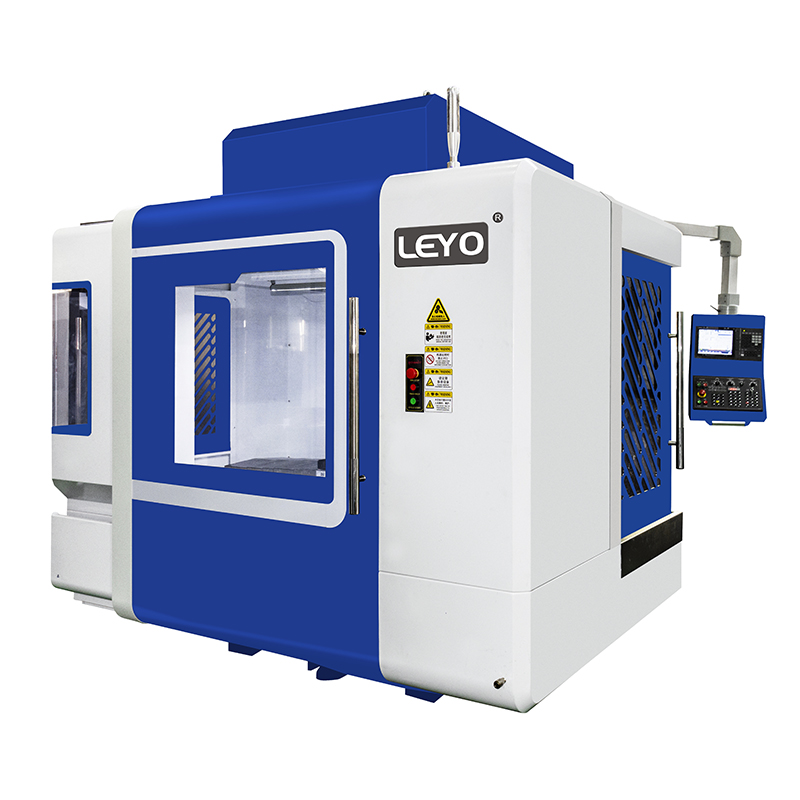
Essential Power Turret Lathe Cycles You Need to Master
Understanding the physical hardware is only half the equation. Mastering the programming cycles is where the true time savings materialize on the shop floor. Modern controllers utilize specific G-code commands to automate complex material removal processes.
Standard Roughing and Finishing Cycles
Material removal is typically the most time-consuming phase of the turning process. Standard canned cycles like G71 for rough turning and G72 for rough facing are fundamental to efficient operation. Instead of manually programming every single pass line-by-line, the operator simply defines the final profile of the part, the depth of cut, and the feed rate. The machine controller automatically calculates the optimal tool path to aggressively clear the bulk material. Once the roughing is complete, the turret indexes to a fresh insert. A G70 finishing cycle is then called to make a single continuous pass along the programmed boundary. This leaves a pristine surface finish and ensures tight dimensional accuracy.
Drilling, Tapping, and Threading Cycles
Moving a partially finished component from a lathe to a drill press introduces alignment runout and wastes valuable time. Turret setups solve this by executing precise hole-making operations directly on the spindle centerline. Utilizing cycles like G83 peck drilling allows the turret to drill deep holes by automatically retracting the drill at set intervals. This clears packed chips and prevents catastrophic tool breakage. For threading operations, the G76 multiple pass threading cycle synchronizes the spindle rotation with the Z-axis feed rate. This enables the machine to cut complex external or internal threads in multiple synchronized passes.
Balanced Turning and Pinch Turning
For shops utilizing multi-turret machines, balanced turning is a highly advanced productivity cycle. In this specialized operation, two cutting tools engage the workpiece simultaneously directly opposite each other. One tool typically roughs the material slightly ahead of the second tool acting as a semi-finisher. This approach offers massive benefits. It effectively doubles the material removal rate. More importantly, the opposing cutting forces cancel each other out. When turning long slender parts, this balance prevents the workpiece from deflecting or chattering away from the cutting edge.
Unlocking True Versatility: The Live Tooling Lathe
What are Driven Tools?
Standard turrets are inherently restricted to turning operations where the workpiece rotates and the cutting tool remains stationary. However, advanced models change this dynamic entirely by incorporating driven tools. In this configuration, the turret features internal drive motors that power rotating tools directly within the station. Machinists can mount end mills, drills, and taps right next to standard turning inserts.
Transitioning to a Turning Milling Center
When you combine live tooling capabilities with full C-axis spindle control, a standard machine transforms into a highly versatile turning milling center. The C-axis allows the main lathe spindle to stop, orient, and lock at precise degree increments. For example, high-performance models like the CL-550M deliver exceptional C-axis resolution and high-speed milling RPMs. For small shops, this represents the absolute pinnacle of single-setup machining. Instead of turning a part, unloading it, building a custom fixture, and setting it up in a vertical mill to cut a hex, the entire process happens in one continuous cycle. This consolidation eliminates the queue time between machines and drastically reduces fixturing costs.
Industry Trends: The Shift Towards Compact Automation
Recent manufacturing data highlights a distinct shift in how small-to-medium enterprises approach part production. Driven by a persistent shortage of skilled machinists and the growing trend of supply chain reshoring, job shops are aggressively moving away from single-task equipment. The current market demands high output per square foot. Consequently, compact multi-tasking automation is surging. Small facilities now leverage advanced turret cycles to bridge the gap between high-volume production turning and complex low-volume milling. Investing in a modern power turret lathe aligns perfectly with this specific transition. It allows local shops to bid competitively on tight-tolerance aerospace or medical contracts that were previously dominated by massive corporate manufacturers.
Power, Sizing, and Setup Considerations for Small Businesses
Floor Space and Machine Footprint
For home-based shops or facilities operating out of tight industrial units, floor space is a premium asset. When evaluating new machinery, it is crucial to measure the overall dynamic footprint. This includes the clearance required for chip conveyors, coolant tanks, and electrical cabinet doors. Slant-bed configurations are heavily favored in small spaces. A true 45-degree slant bed design, built from solid Meehanite cast iron, allows gravity to pull hot chips and coolant directly down into the pan. This keeps the work envelope clean. This design also brings the spindle closer to the operator, providing excellent ergonomics without requiring an oversized machine base.
Electrical Requirements
Industrial power supply is historically one of the largest hurdles for small businesses. Most industrial-grade CNC machinery requires 208V to 480V 3-phase power to operate high-torque spindle motors smoothly. If your facility only has residential-style 220V single-phase power, reliable workarounds exist. By sizing the machine correctly, you can utilize high-quality rotary phase converters or digital solid-state phase converters to generate the necessary third leg of power.
Optimizing Workflow and Cycle Times to Boost Productivity
Smart Tool Management
Even with automated systems, inefficient tool arrangement can silently inflate your cycle times. Shop managers should arrange tools sequentially in the turret based on the specific order of operations. Specifically, placing the finishing tool in Station 2 right next to the roughing tool in Station 1 minimizes the rotational distance the turret must travel. Conversely, if the machine must rotate 180 degrees to reach the next tool, those wasted seconds accumulate rapidly over a production run of hundreds of parts.
Programming for Efficiency
Optimizing your CAM programming is another critical step for shaving seconds off every cycle. Programmers should focus on dialing in optimal feeds and speeds based on specific material properties. In addition, meticulously adjusting tool clearance planes reduces air cutting time. Instead of retracting the tool two inches away from the part, optimizing it to a quarter-inch safely clears the workpiece while keeping the machine actively cutting metal.
Buying Guide: Finding the Right Fit for Your Shop
Choosing the right machine requires an honest assessment of your typical workload and material types. To simplify the decision-making process, refer to the core comparison below.
| Machine Configuration | Setup Time | Cycle Efficiency | Best Application Scenario |
|---|---|---|---|
| Gang-Tool CNC | High | Moderate | Simple short parts, limited tool requirements. |
| Standard Power Turret | Low | High | Medium complexity turning, high-mix job shops. |
| Live Tooling Center | Very Low | Maximum | Complex single-setup parts, aerospace, medical components. |
Evaluating Total Cost of Ownership
The initial sticker price of the machine is only a fraction of the financial equation. Smart shop owners evaluate the Total Cost of Ownership. This encompasses the initial purchase price, the cost of specialized tooling, routine maintenance, coolant consumption, and daily power usage. However, it is vital to factor in the revenue gained. A machine equipped with advanced cycles might cost slightly more upfront, but the ability to reduce cycle times by 30 percent and bid on higher-margin contracts yields a significantly higher ROI.
Conclusion
Upgrading your shop floor with an automated turning center is a highly strategic move that pays dividends. By transitioning away from manual setups and single-tool constraints, small shops can maximize their daily output. You consolidate multi-machine operations into a single compact footprint and significantly increase overall profitability. The long-term payoff in production speed, repeatability, and precision is unmatched. If you are ready to eliminate bottlenecks and take your manufacturing capabilities to the next level, evaluating a high-performance live tooling lathe is the definitive path forward. Partnering with a reliable manufacturer ensures your team is fully equipped to utilize the advanced cycles that drive daily profitability.
Frequently Asked Questions
What is the difference between a standard CNC lathe and a power turret lathe?
A standard CNC machine may utilize a gang-tool setup or a simple quick-change tool post. These configurations often require manual operator intervention to swap tools or severely limit the total number of tools available for a complex job. A turret-equipped lathe utilizes an automated rotating mechanism that holds multiple tools simultaneously. This allows for incredibly fast programmable tool changes during a single uninterrupted machining cycle.
Is a live tooling lathe worth the investment for a small shop?
Yes. In almost all production scenarios it is highly beneficial. While the initial capital expenditure is higher than a standard 2-axis lathe, a machine with driven tools functions as a complete turning and milling center. It allows operators to turn, mill, drill, and tap in a single setup. For a small shop, this eliminates the need to purchase and find space for a secondary milling machine.
Can I run a power turret lathe on single-phase power?
Most heavy-duty industrial turning centers require 208V to 480V 3-phase power. However, small or home-based shops lacking 3-phase infrastructure can successfully operate these machines using appropriately sized rotary phase converters or digital solid-state phase converters.
How do you program a power turret lathe cycle?
Modern controllers use standard G-code to automate material removal. Operators input the final part profile, depth of cut, and feed rate into a CAM system or directly at the control panel. The machine controller then calculates the most efficient tool path, managing roughing passes and tool retractions automatically.
What is the maximum tool capacity for a compact turret lathe?
Most compact industrial turrets hold 8, 10, or 12 tools. Advanced models can feature 16 stations or utilize half-indexing features to increase the number of available cutting edges without expanding the physical footprint of the machine.
Related Articles
-
 Dear Customers and Business Partners,In order to strictly comply with national export control laws and regulations, and to fulfill international obligations, ensuring that our exported CNC milling machines and CNC lathes are fully legal and compliant, we hereby notify you of the relevant policies coCompany News
-
 Abrasive graphite dust destroys standard CNCs. Learn why specialized dust-proof machines and proper wet or dry milling methods are essential for safe EDM electrode production.Product news
-
 Drill tap centers deliver high-speed threading for high-volume production. Understanding spindle torque limits prevents costly tool breakage and optimizes machine cycle times.Product news


