



When engineers and buyers search “What is the difference between grinding and milling CNC?”, they usually want a practical answer: Which process delivers the tolerance, surface finish, cycle time, and cost-per-part they need. Both are computer-controlled subtractive processes, but they remove material in fundamentally different ways. Milling uses a multi-edge cutting tool to shear material away in chips. Grinding uses abrasive grains to remove material in microscopic fragments—often as the final step to achieve ultra-precision.
In modern production lines, milling shapes the part efficiently, while a Cnc Grinding Machine perfects it. That relationship is exactly why the two technologies are often discussed together: milling gets you close; a Cnc Grinding Machine gets you exact.
Grinding CNC vs Milling CNC: the core difference
The simplest difference is the cutting mechanism:
Milling CNC: A rotating cutter with defined cutting edges slices material, removing relatively larger chips.
Grinding CNC: A grinding wheel with countless abrasive grains removes extremely small amounts of material per contact point.
This difference produces a major outcome: a Cnc Grinding Machine is typically chosen for final tolerance and surface finish requirements that are difficult or costly to achieve with milling alone.
A practical way to remember it:
Milling = efficient shaping and feature creation
Cnc Grinding Machine = precision finishing and dimensional control
When milling is the better choice
Milling CNC is often the best starting point for a wide range of components because it can remove a lot of material quickly and create complex shapes. If your part requires pockets, slots, 3D surfaces, and multiple features in one setup, milling is usually faster than grinding.
Milling is commonly selected for:
High material removal rates (roughing and semi-finishing)
Complex 3D geometry (molds, cavities, impellers)
Multi-face machining in one clamping (5-axis CNC milling)
Features like threads, pockets, keyways, and drilled holes
However, milling struggles when you need extreme roundness, flatness, or size stability at the micron level across long production runs. That is where a Cnc Grinding Machine becomes essential.
When grinding is the better choice
Grinding CNC is often the best option when the part’s function depends on tight size control and fine surface characteristics. A Cnc Grinding Machine excels at producing consistent geometry on hardened materials, precision bores, and bearing surfaces.
Grinding is commonly selected for:
Tight tolerance shafts, bearing journals, and precision sleeves
Hardened steel finishing after heat treatment
High-quality sealing surfaces and mating surfaces
Internal bores where roundness and taper must be controlled
Superior surface finish for friction, wear, and noise control
In many factories, the sequence is: milling → heat treat → Cnc Grinding Machine finishing. This keeps milling efficient and lets grinding achieve the final precision.
Surface finish and tolerance: why grinders win the “final micron”
A major search intent behind this topic is tolerance capability. While modern milling can be very accurate, real-world variation (tool wear, deflection, vibration, thermal drift) becomes expensive to manage at ultra-tight levels. A Cnc Grinding Machine is designed specifically to stabilize those variables.
Typical differences in outcomes:
Milling: often best for “good” tolerances and complex geometry; surface finish depends heavily on tooling and strategy.
Cnc Grinding Machine: typically better for stable diameter/flatness control and repeatable finishing—especially after hardening.
This is why parts like bearing rings, hydraulic sleeves, and precision bores often move to a Cnc Grinding Machine in the final operation.
Heat-treated parts: milling vs grinding CNC
Another key difference is how the processes handle hardened materials.
Milling hardened steel is possible, but tool wear can rise quickly, and holding size can become costly.
A Cnc Grinding Machine is commonly optimized for hard finishing: stable wheels, controlled dressing, and repeatable micron-level corrections.
For industries like bearings, automotive drivetrains, and aerospace actuators, the ability of a Cnc Grinding Machine to finish hardened surfaces predictably is a major advantage.
Process stability and repeatability: CNC control matters
Both milling and grinding use CNC control, but grinding benefits heavily from process standardization features:
compensation for wheel wear
stable feed and spark-out timing
integrated automatic dressing
measurement feedback options like Renishaw optical scale
consistent workholding, such as hydraulic four-jaw chuck
coolant cleanliness support like magnet filter
These features help a Cnc Grinding Machine maintain micron-level accuracy across long runs and multiple shifts—something many buyers prioritize when searching for CNC grinding solutions.
Featured snippet comparison: grinding CNC vs milling CNC
Below is a structured comparison that matches what most Google users want: quick, decision-focused differences.
Category | Milling CNC | Grinding CNC (Cnc Grinding Machine) |
|---|---|---|
Material removal | High (chips) | Low-to-medium (abrasive micro-removal) |
Best role | Shaping, features, rough/finish milling | Final finishing, sizing, geometry correction |
Typical tolerance focus | Good, depends on setup/tooling | micron-level accuracy focus |
Surface quality | Good to very good with proper tooling | Superior surface finish potential |
Hardened material | Possible but tool wear can be high | Commonly preferred for hard finishing |
Geometry | Excellent for complex 3D shapes | Excellent for precise cylinders, flats, bores, faces |
Consumable wear | Cutting tool wear | Wheel wear managed via automatic dressing |
Repeatability | High with good control | Very high when the Cnc Grinding Machine is properly configured |
In short, milling makes the part; a Cnc Grinding Machine perfects the critical surfaces.
Example: why composite internal + face grinding is different from milling
To make this difference more concrete, consider parts like bearing rings and precision sleeves. These parts often require the bore (ID) and the end face relationship to be tightly controlled. Milling can create the geometry, but holding the bore’s final roundness and the face’s perpendicularity at high consistency can be difficult—especially after heat treatment.
This is where a composite Cnc Grinding Machine such as a compound internal grinding machine becomes valuable. The LEYO 450L is designed for simultaneous grinding of bore and end face in one setup, helping manufacturers reduce reclamping errors and improve dimensional consistency.
LEYO 450L: features that support grinding advantages
The following specifications show what modern buyers often look for when choosing a Cnc Grinding Machine for internal/face finishing:
Controller: Siemens 828D (stable CNC platform)
Workpiece length capability: maximum workpiece length 300mm
Load capability: load capacity 200 kg
Work spindle speed: workpiece spindle 0-1000rpm
Feedback: Renishaw optical scale
Clamping: hydraulic four-jaw chuck (16 inches)
Coolant management: magnet filter
Automation: automatic dressing
Compliance: CE certification
For high-volume industries—automotive, aerospace, and bearings—these features are often what turn grinding into a predictable production process rather than a manual craft. In particular, single-setup internal + face grinding can reduce cycle steps and improve part-to-part consistency.
Cost-per-part and production efficiency: which wins?
Many buyers assume milling is always cheaper. For roughing, that is often true. But at the finishing stage, cost-per-part depends on scrap rate, rework, inspection time, and stability.
Milling can be lower cost when:
tolerances are moderate
surface finish requirements are not extreme
geometry is complex and multi-feature
heat treatment is not creating distortion issues
A Cnc Grinding Machine can be lower cost when:
tight tolerances drive scrap/rework risk
hardened finishing is needed
surface finish affects wear, noise, or sealing
relationships between features (bore-to-face) must be held consistently
throughput improves by reducing setups (as with a compound internal grinding machine)
A common “best practice” is hybrid routing: milling for shape + Cnc Grinding Machine for precision surfaces. This often delivers the best balance of speed and accuracy.
2026 trends: why grinding and milling are converging in planning
Modern manufacturing trends push both processes toward smarter workflows:
More factories use digital process planning: milling strategies leave consistent stock for the Cnc Grinding Machine to remove.
Automation is rising: both milling and Cnc Grinding Machine cells integrate loaders and measurement.
Increased demand for traceability and stable capability (Cp/Cpk): pushing more critical surfaces toward Cnc Grinding Machine finishing.
Higher usage of hard materials and performance alloys in automotive and aerospace: making grinding more central in the finishing chain.
As tolerance expectations tighten and labor costs rise, the “milling vs grinding” question becomes “how do we combine milling and a Cnc Grinding Machine for the best total outcome?”
FAQs
Is grinding more accurate than milling CNC?
In many finishing applications, yes. A Cnc Grinding Machine is often preferred for micron-level accuracy and superior surface finish, especially on hardened parts or critical bearing and sealing surfaces.
Can milling replace grinding?
Sometimes, if tolerances and surface finish requirements are moderate. But when the final dimension and geometry must be held very tightly—or when parts distort after heat treatment—a Cnc Grinding Machine is often the more stable, cost-effective finishing method.
Why do bearing rings and sleeves often use grinding instead of milling for final size?
Because the bore roundness, taper, and face relationship are critical. A composite Cnc Grinding Machine like a compound internal grinding machine can finish bore and face in one setup, improving consistency for bearing rings and precision sleeves.
What role do automatic dressing and filtration play in grinding?
automatic dressing keeps wheel geometry sharp and consistent over long runs, and systems like a magnet filter help maintain coolant cleanliness—both improve stability, finish, and the repeatability of a Cnc Grinding Machine.
Related Articles
-
 Dear Customers and Business Partners,In order to strictly comply with national export control laws and regulations, and to fulfill international obligations, ensuring that our exported CNC milling machines and CNC lathes are fully legal and compliant, we hereby notify you of the relevant policies coCompany News
 -
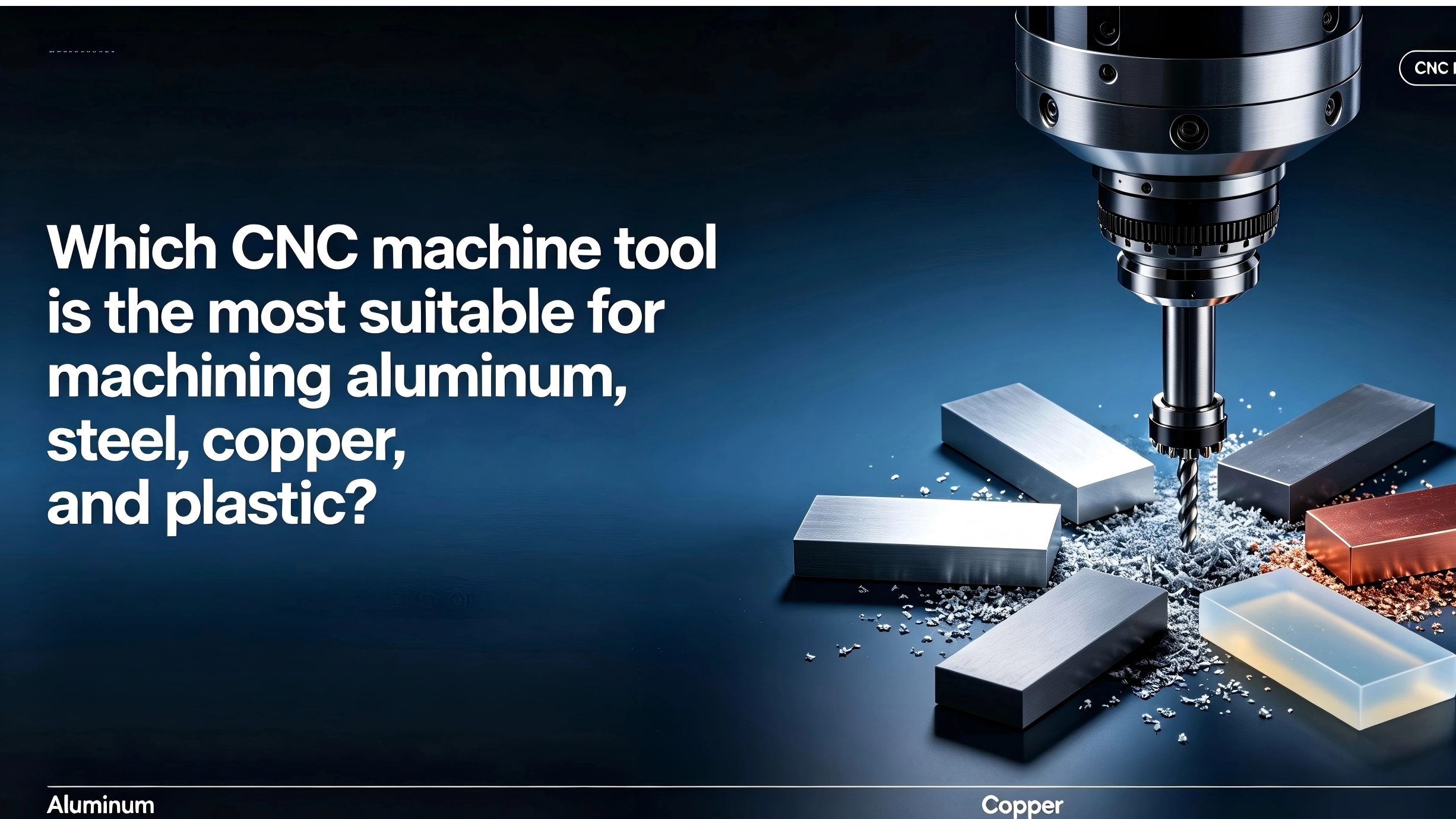 Understanding which machine tool is best suited for machining which material can assist machining factories and machine tool agents in making the optimal choice. This article introduces the materials that can be most effectively machined by CNC milling machines, CNC lathes, and CNC machining centers.CNC Machine Industry News
 -
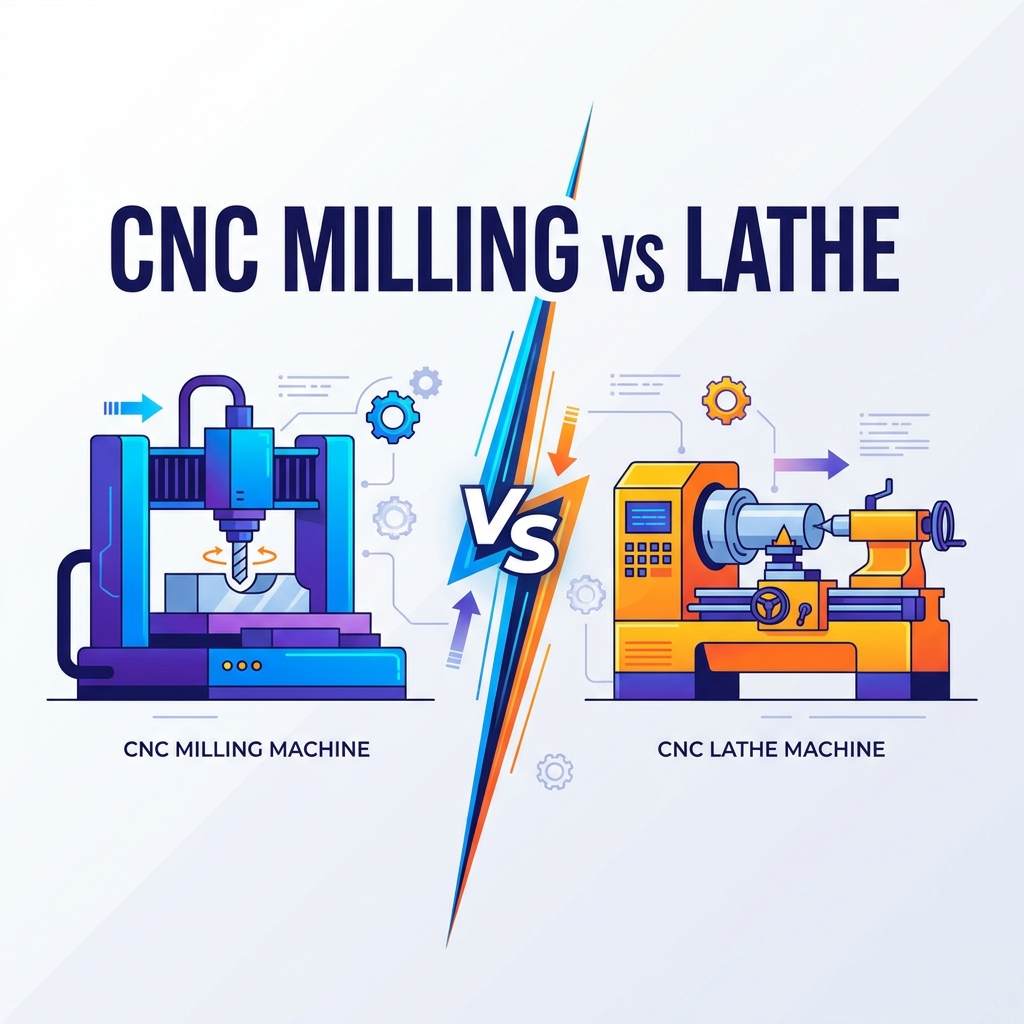 Compare CNC milling vs. turning. Learn differences in kinematics, geometry, cost, and automation to select the right machine for your production.Product news


