



Introduction
CNC (Computer Numerical Control) machines are vital in modern manufacturing, offering precision and efficiency. The CNC Milling Machine is especially crucial, shaping materials with exact specifications.
In this article, we will explore the applications of CNC milling machines across industries, their role in precision manufacturing, and how they enhance production. We’ll also discuss their advantages and future trends.
What is a CNC Machine?
A CNC machine is a computer-controlled tool that automates the process of cutting, drilling, milling, and shaping materials. It works based on predefined programs that instruct the machine on how to move the cutting tools and workpieces. CNC technology eliminates the need for manual intervention, allowing for faster and more precise operations.
CNC Milling Machines are a subset of CNC machines that specialize in rotating cutting tools to remove material from a workpiece. These machines are ideal for creating parts with complex geometries, such as intricate designs or fine details.
CNC vs. Manual Processes
Traditional manual machining relies on human operators to control the tools, which can be prone to error and inconsistency. In contrast, CNC machines are automated, ensuring that every part produced meets the exact specifications, improving repeatability and reducing human error.
CNC milling machines are particularly suited for industries that require high precision and large-scale production runs. They can cut and shape a variety of materials, including metals, plastics, and wood, with impressive accuracy.
Aspect | Manual Processes | CNC Machines |
Control Method | Human Operators | Automated |
Error & Inconsistency | Prone to error | Reduced errors |
Suitability | Small-scale or simple tasks | High precision, large-scale production |
Material Types | Limited range | Metals, Plastics, Wood |
Precision | Less precise | High precision |
The Role of CNC Milling Machines in Precision Manufacturing
High Precision Cutting and Shaping
One of the key advantages of CNC milling machines is their ability to achieve high-precision cuts and shapes with minimal deviation. These machines are capable of cutting materials to within thousandths of an inch, making them indispensable for industries such as aerospace, automotive, and medical device manufacturing.
The ability to produce highly detailed parts is particularly useful when working with hard-to-machine materials such as titanium, stainless steel, and certain plastics.
Repeatability and Consistency
Once a CNC program is written, it can be used repeatedly to create identical parts. This repeatability ensures that every part produced has the same dimensions and quality, crucial for mass production. Industries like automotive, where uniformity is key, benefit from this feature.
Complex Geometry Manufacturing
CNC milling machines are capable of producing complex geometries that would be nearly impossible to achieve manually. Whether it's intricate internal features or detailed external shapes, CNC machines excel at creating parts with high geometric complexity. This is why CNC milling is favored in the production of turbine blades, engine components, and custom parts for medical devices.
Precision Advantage | Key Value |
High-Precision Cutting | Achieves cuts to thousandths of an inch |
Repeatability | Identical parts with the same dimensions and quality |
Complex Geometry | Capable of intricate internal and external features |
Key Applications of CNC Milling Machines
Aerospace
In the aerospace industry, CNC milling machines are essential for manufacturing components such as turbine blades and structural parts for aircraft. These parts require high precision to ensure safety and performance. CNC milling allows manufacturers to produce lightweight yet durable components that meet the stringent standards set by the aerospace sector.
Example: A turbine blade, which needs to withstand extreme temperatures and pressures, can be machined precisely using a CNC milling machine, ensuring both strength and reliability.
Automotive Manufacturing
CNC milling machines play a significant role in the automotive industry, especially in the production of parts like engine blocks, transmission systems, and chassis components. The ability to create highly detailed parts with tight tolerances makes CNC milling machines an indispensable tool in automotive manufacturing.
In addition to high-precision parts, CNC milling machines are also used to produce tools and molds for mass production.
Medical Device Manufacturing
The medical device industry relies on CNC milling machines to create components like prosthetics, surgical instruments, and dental implants. These parts must meet extremely high standards of quality and precision to ensure patient safety. CNC milling machines can work with biocompatible materials, such as stainless steel and titanium, to produce accurate and reliable medical devices.
Example: CNC milling machines are used to create customized dental implants, tailored to the specific needs of individual patients.
Industry | Key Application |
Aerospace | Manufacturing turbine blades, structural parts |
Automotive Manufacturing | Engine blocks, transmission systems, chassis parts |
Medical Device Manufacturing | Prosthetics, surgical instruments, dental implants |
Advantages of CNC Milling Machines in Mass Production
Efficiency and Quality Control in Mass Production
CNC milling machines excel in high-volume production settings. Once a program is set up, these machines can operate continuously, producing parts with consistent quality over time. This ability to maintain tight tolerances and high precision throughout the production run is a significant advantage in mass production environments.
Reduced Human Intervention and Increased Productivity
The automation of CNC machines greatly reduces the need for human operators to oversee production, freeing up labor for other tasks. This results in increased productivity and fewer opportunities for human error. CNC machines also reduce the need for manual tool changes, making the production process more efficient.
Time and Cost Savings
By improving production speeds and reducing waste, CNC milling machines can significantly lower overall production costs. The high precision of CNC machines reduces the need for rework, which saves both time and money. Additionally, the automation of CNC processes reduces labor costs and enhances overall productivity.
Advantage | Key Value |
Efficiency & Quality Control | Continuous operation with consistent quality |
Reduced Human Intervention | Increases productivity, reduces human error |
Time & Cost Savings | Reduces waste, improves production speed, lowers costs |
CNC Milling Machines in Custom Prototyping and Rapid Tooling
Prototyping and Design Iteration
In product development, CNC milling machines are essential for creating prototypes quickly and accurately. Engineers can use CNC machines to test designs and make rapid adjustments before moving on to full-scale production. This rapid prototyping capability allows companies to reduce time-to-market and ensure that designs are functional before committing to expensive tooling.
Small-Scale Custom Production
CNC milling machines are ideal for small-scale custom production. Whether it’s for a limited run of parts or one-off custom designs, CNC machines can create precise parts without the need for costly molds or dies. This flexibility is particularly useful for niche markets that require unique or specialized parts.
The Role of CNC Milling Machines in Smart Manufacturing
Integration with Industry 4.0
In today’s Industry 4.0 environment, CNC milling machines are becoming increasingly connected with other smart devices and software systems. This integration allows for real-time monitoring, predictive maintenance, and more efficient production processes. CNC machines can share data with other systems to ensure seamless operations across the entire manufacturing floor.
Optimizing Production Through Digital Processes
CNC milling machines enable digital workflows that allow for the integration of design, production, and quality control processes. By monitoring and analyzing real-time data, manufacturers can optimize the production process, reduce downtime, and improve efficiency.
Future Trends and Challenges in CNC Milling
Technological Advancements
As technology continues to evolve, CNC milling machines are becoming faster, more precise, and more capable of handling complex tasks. Emerging technologies such as AI-driven automation and additive manufacturing are expected to further enhance the capabilities of CNC milling machines in the coming years.
Challenges in the Industry
Despite their many advantages, CNC milling machines come with challenges. One of the main concerns is the cost of initial investment, as high-quality CNC machines can be expensive. Additionally, keeping up with rapidly advancing technology and ensuring that machines remain updated can be a challenge for manufacturers.
Conclusion
CNC milling machines are essential in precision manufacturing, offering repeatability and consistency. They are vital in industries like aerospace, automotive, and medical devices. By adopting CNC technology, businesses can boost efficiency, reduce costs, and maintain competitiveness. LEYO Group’s products provide value by enhancing production efficiency and ensuring consistent product quality, helping companies stay ahead in the market.
FAQ
Q: What is a CNC machine used for?
A: A CNC machine is used for automating the process of cutting, shaping, and drilling materials with high precision. It is commonly used in industries like aerospace, automotive, and medical device manufacturing.
Q: What is the role of a CNC Milling Machine in manufacturing?
A: A CNC Milling Machine is specifically used for shaping materials by rotating cutting tools. It plays a critical role in creating complex geometries with high accuracy in industries that demand precision.
Q: Why are CNC Milling Machines preferred over manual machining?
A: CNC Milling Machines provide higher precision, repeatability, and efficiency compared to manual machining. They reduce human error and ensure consistent product quality, making them essential in mass production.
Q: How does a CNC Milling Machine improve production efficiency?
A: By automating cutting and shaping processes, CNC Milling Machines increase production speed and minimize human error. This leads to consistent quality and reduced production time.
Q: What is the cost of a CNC Milling Machine?
A: The cost of a CNC Milling Machine varies depending on its size, capabilities, and features. High-end models can range from tens of thousands to several hundred thousand dollars.
Q: How do CNC Milling Machines contribute to high-quality manufacturing?
A: CNC Milling Machines create parts with precise dimensions and tight tolerances, which is critical for industries like aerospace and automotive where quality and safety are paramount.
Related Articles
-
 Dear Customers and Business Partners,In order to strictly comply with national export control laws and regulations, and to fulfill international obligations, ensuring that our exported CNC milling machines and CNC lathes are fully legal and compliant, we hereby notify you of the relevant policies coCompany News
 -
 Understanding which machine tool is best suited for machining which material can assist machining factories and machine tool agents in making the optimal choice. This article introduces the materials that can be most effectively machined by CNC milling machines, CNC lathes, and CNC machining centers.CNC Machine Industry News
 -
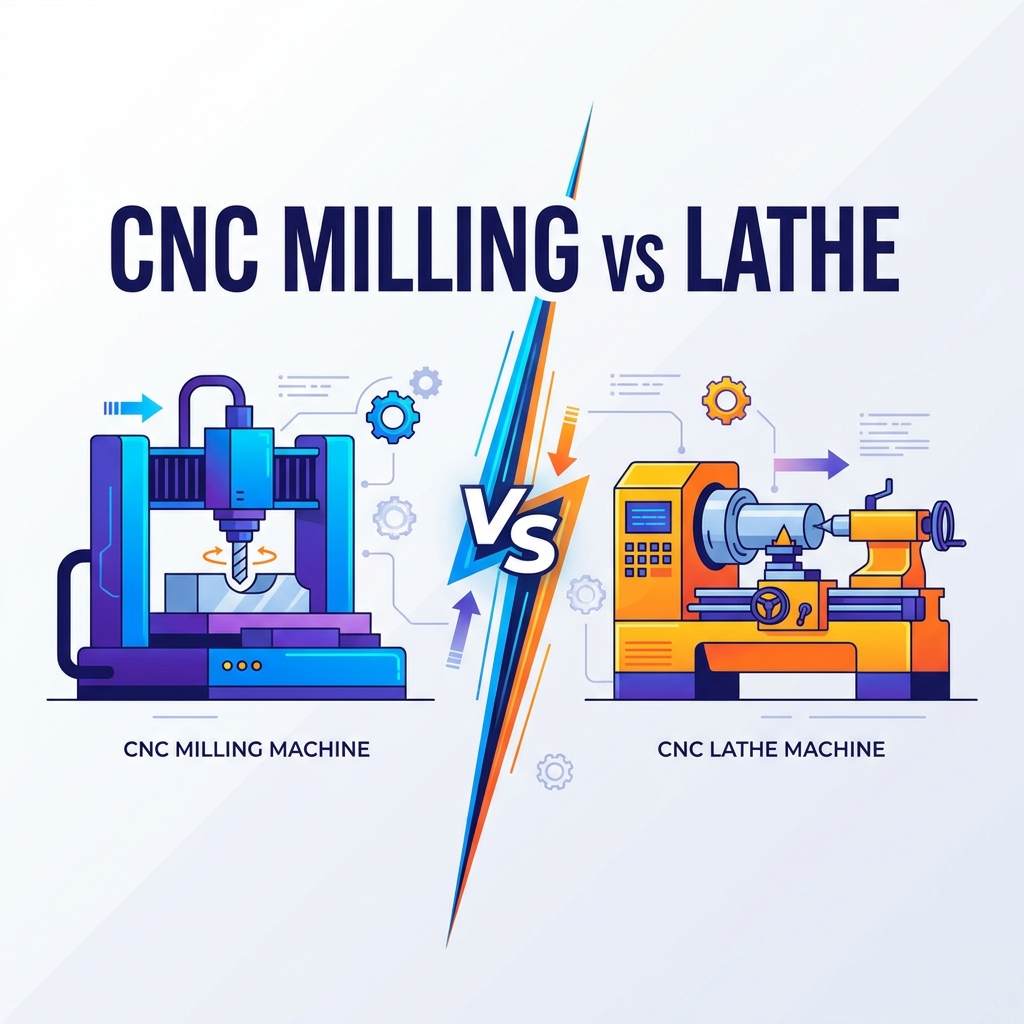 Compare CNC milling vs. turning. Learn differences in kinematics, geometry, cost, and automation to select the right machine for your production.Product news


