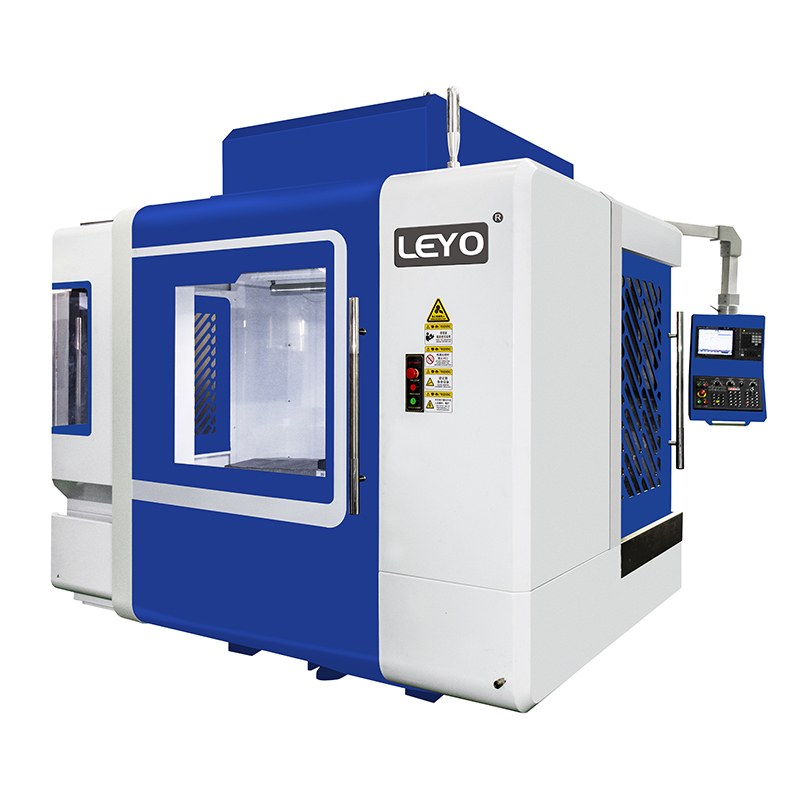

How to Choose Your First CNC Milling Machine Based on Material (Steel, Aluminum, Titanium)
Purchasing your first CNC milling machine is a pivotal investment that will directly shape your shop's capabilities, productivity, and growth. With an overwhelming array of models and configurations on the market, one of the most common and critical questions from newcomers is: "What kind of mill do I actually need to machine my materials efficiently?"
The truth is, material properties dictate machine requirements. Choosing the wrong equipment can lead to poor accuracy, excessive tool wear, frustratingly low productivity, and premature machine failure.
This guide provides a clear decision-making framework by analyzing how the three most common workhorse materials:Steel, Aluminum, and Titanium.should dictate the core specifications of your first CNC mill, empowering you to make a confident and informed investment.
Part 1: The Universal Principles for Your First CNC Milling Machine
Before diving into material specifics, three foundational considerations apply to everyone:
Define Budget & ROI: Establish a realistic budget range and estimate the required job value this machine must produce to pay for itself. For a first machine, prioritize core needs over "future-proofing" with expensive extras.
Assess Space & Utilities: Verify your workshop has adequate floor space, foundation strength (for heavier machines), and reliable 3-phase power supply.
Part 2: Let Your Material Guide the Choice: Matching the Machine to Your Work
Scenario 1: Primarily Machining Steels (e.g., 1045, P20 Mold Steel, 304/316 Stainless)
The Material feature: Steel is hard, generates high cutting forces and significant heat, demanding exceptional rigidity and stability from the machine.
Key Machine Characteristics:
1.High Rigidity Structure:
Prioritize mills with a cast iron bed and box-type structure. A heavy base and column effectively dampen vibration during heavy cuts, ensuring precision. Avoid overly light "bench-top" or "light-duty" models.
2.Powerful Spindle & Drives:
Spindle torque is more critical than maximum RPM. Look for a BT40 spindle is better than BT30.
Servo Motors are strongly preferred over stepper motors. They provide greater torque, faster response, and better performance with tough materials like stainless steel.
Effective Cooling: A high-pressure, high-volume flood coolant system is essential to control workpiece and tool temperature, extending tool life and ensuring dimensional stability.
Recommended Configuration Checklist:
Cast iron construction;machine weight > 2.5 tons is ideal
BT40 spindle, with coolant through-spindle (CTS) as an good options
Servo motors on all axes
High-power spindle motor (≥ 7.5 kW)
Full enclosure with a built-in chip conveyor
If multiple functions cannot be simultaneously considered, rigidity should be given priority.
Scenario 2: Primarily Machining Aluminum
The Material feature: Aluminum is soft and gummy. The goal is extreme material removal rates (MRR) and excellent surface finish, requiring efficient chip evacuation to prevent recutting.
Key Machine Characteristics:
1.High-Speed Spindle:
This is the heart of aluminum machining. The spindle should have a maximum speed of at least 8,000 RPM, with 12,000 to 15,000+ RPM being a major advantage. High RPM enables efficient cutting with small tools and improves finish.
2.Rapid Traverse & High Feed Rates:
Look for rapid traverse speeds of ≥ 24 m/min (≈ 950 IPM) or higher. Faster axis movements minimize non-cutting time, dramatically boosting overall job cycle times.
Superior Chip Evacuation: The machine design should facilitate chip flow. A high-volume flood coolant system and an integrated screw-type chip conveyor are highly recommended to keep the work area clean.
Recommended Configuration Checklist:
Spindle max speed ≥ 8,000 RPM (12,000-15,000 RPM optimal)
Rapid traverse ≥ 24 m/min
Lightweight yet rigid moving components (for high acceleration)
High-volume coolant pump and chip conveyor
Consider adding a mist collector to maintain shop air quality
Why This Matters: In aluminum machining, efficiency is profit. A high-speed spindle combined with fast rapids can multiply your MRR, giving you a critical time-to-market advantage.
Scenario 3: Primarily Machining Titanium & High-Temperature Alloys
The Material Feature: This is the most demanding scenario. Titanium is strong, has poor thermal conductivity, and concentrates heat at the cutting edge.Moreover, titanium is prone to sticking to cutting tools. This leads to rapid tool wear and requires managing very high cutting forces.
Key Machine Characteristics:
1.Extreme Rigidity & Damping:
Requires even greater rigidity than steel machining. Examine the monolithic cast structure and the size and pre-load of guideways (wide linear guides or heavy-duty roller-type guides are best).
2.High-Torque, Constant-Power Spindle:
The spindle must deliver abundant, stable torque in the low-to-mid range (500-3000 RPM). A wide constant power band allows it to maintain cutting force at the lower speeds optimal for titanium.
Thermal Stability & Advanced Cooling: Thermo-symmetric design and comprehensive cooling systems are critical. Forced cooling for the spindle and ball screws is vital to control thermal growth and maintain accuracy during long cycles. High-pressure coolant (≥ 70 bar / 1000 psi) is almost mandatory to penetrate the cut zone, cool the tool, and evacuate chips.
Recommended Configuration Checklist:
Extra-heavy construction (machine weight is often 1.5x that of a similar-sized aluminum mill)
Large spindle interface (BT40/CAT40 or larger, focused on low-end torque)
High-capacity servo drives with ample overload capability
Through-spindle coolant (high-pressure option)
Roller-type or extra-wide linear guides
Liquid cooling for spindle and ball screws
Critical Advice: Mills for titanium are "specialized tools." If this is your core business, consult directly with machine tool suppliers who have proven expertise in this field and can provide validated process packages.
Summary & Your Action Plan
Identify Your "Bread and Butter" Material: Analyze your past and projected orders. What material will constitute 70%+ of your work? Configure your machine around this core need.
Ready to Find the Right CNC Milling Machine for Your Material?
Your Next Step: Gather drawings or samples of your 1-2 most common parts. Contact our technical team for a free machine selection analysis and tailored configuration proposal based on your specific material and process challenges.