



Positioning accuracy: Measurement of accuracy
Positioning accuracy describes how precisely a machine tool can reach the programmed target position in space. It reflects the deviation between the actual stopping point and the expected coordinates.
Example: If the control system commands a movement along the Y-axis to 200.000 millimeters, but the tool always reaches a position of 200.008 millimeters, the positioning inaccuracy is 0.008 millimeters. The smaller the deviation, the higher the accuracy.
Repeatability: An indicator of consistency
Repeatability refers to the ability of a machine to repeatedly return to the same position under the same conditions. It does not measure the correctness relative to the instructions, but rather the consistency of the results across multiple cycles.
Example: When the instruction required movement to 200.000 millimeters, the machine stopped at positions of 200.002 millimeters, 199.997 millimeters, and 200.001 millimeters in consecutive attempts. Despite minor differences, these points are closely clustered together, indicating excellent repeatability.
Key insight: If a machine has high repeatability, even with average positioning accuracy, it can often produce consistent and qualified parts because systematic errors can be compensated for. However, poor repeatability can lead to unpredictable results and make quality control difficult.
Why are accuracy and repeatability important?
Excellent product quality: High levels of these two indicators are prerequisites for manufacturing components with precise tolerances, such as those used in the aerospace, automotive, and medical industries.
Optimized production workflow: Machines with stable repeatability can minimize setup adjustments, reduce scrap rates, and improve overall operational efficiency.
Automation support: Unmanned operations and flexible manufacturing systems rely on machines capable of continuous operation over extended periods without manual intervention.
Long-term reliability: Generally, devices designed for high precision feature robust structures and high-quality components, thereby extending their service life.
Factors affecting machine tool accuracy
Multiple elements within the machine system can affect these precision metrics:
Drive mechanism: Choosing between a ball screw and a linear motor is crucial. Although ball screws are more common, linear motors typically offer higher acceleration and precision, but also come with higher costs.
Control system and servo performance: The numerical control unit and servo driver must work in coordination. Advanced control algorithms and high-resolution feedback help reduce lag and overshoot.
Thermal effects: Heat generated by friction in the spindle, screws, and guideways can lead to expansion, causing the machine structure to become misaligned. In high-end models, thermal stability solutions, such as screw assemblies cooled by cooling fluid, are crucial.
Mechanical clearance: Clearance in transmission components may cause delays during direction changes. Modern CNC systems employ clearance compensation technology to eliminate this impact.
Structural rigidity: The sturdy bed, column, and slideway are capable of resisting deformation under load and vibration, thereby maintaining accuracy during heavy-duty cutting processes.
Feedback system: Machines that employ a fully closed-loop system and are equipped with proportional feedback can directly measure the movement of the workbench, thereby correcting screw errors that occur in semi-closed-loop settings.
Testing and Standards: How to Measure Accuracy
Globally, machine tool accuracy is typically verified according to standards such as ISO 230-2 or JIS B. When conducting these high-precision measurements, a laser interferometer is commonly used.
Manufacturers typically specify values such as "positioning accuracy: ±0.004 millimeters" and "repeatability: ±0.002 millimeters". When comparing models, it is important to verify the standards used, as the evaluation methods may vary.
Are you ready to enhance your manufacturing precision?
If you are looking for a CNC machine tool that can provide reliable accuracy and repeatability for your specific application, please consult LEYO immediately. Explore our range of high-precision machining solutions and receive expert guidance tailored to your needs.
Related Articles
-
 Dear Customers and Business Partners,In order to strictly comply with national export control laws and regulations, and to fulfill international obligations, ensuring that our exported CNC milling machines and CNC lathes are fully legal and compliant, we hereby notify you of the relevant policies coCompany News
 -
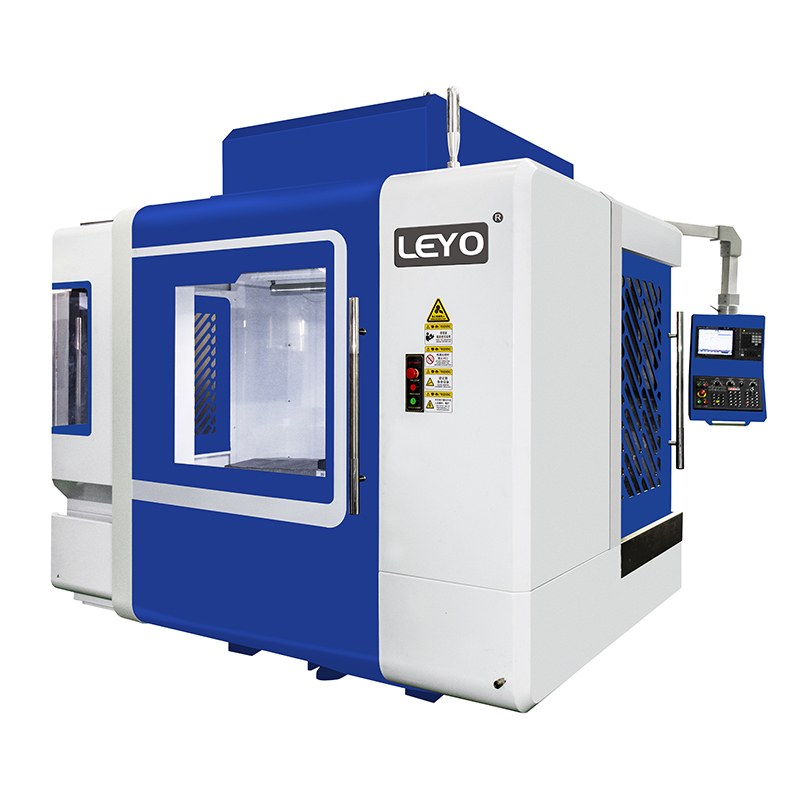 Eliminate part deflection and chatter. Master expert workholding strategies for vertical milling machines to maximize CNC precision and reduce scrap.Product news
 -
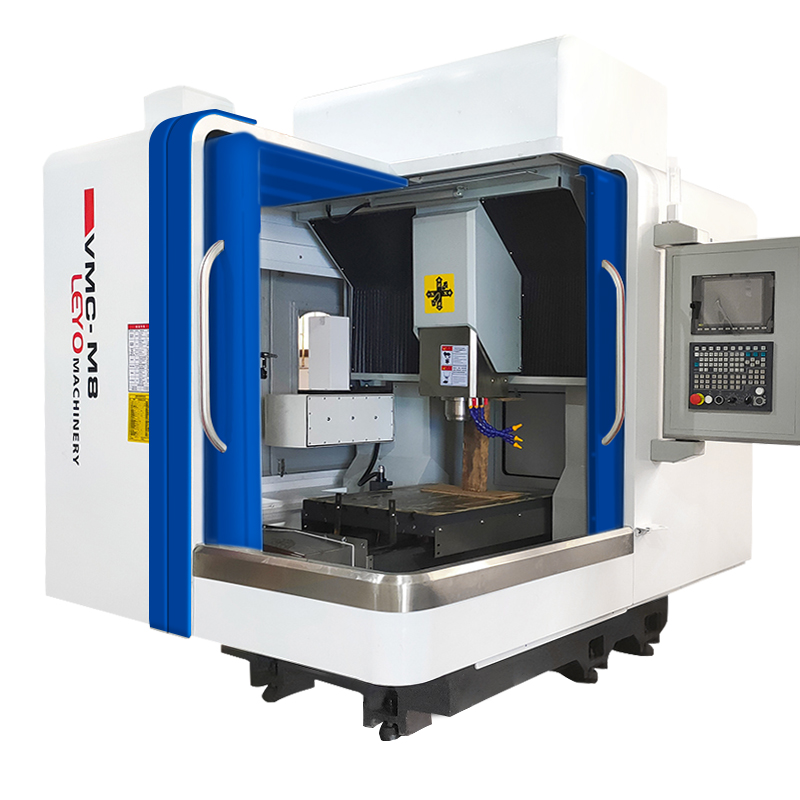 Stop tool breakage and scrap parts. Discover how horizontal milling machines use gravity for flawless chip evacuation and maximum ROI.Product news
