



Core classification and types: CNC milling machines are primarily categorized based on their mechanical configurations, which determine their performance and ideal application scenarios.
1. According to the main axis direction:
Vertical Machining Center (VMC): It is characterized by a spindle axis perpendicular to the worktable. This common design facilitates easier setup, provides a wider field of view, and is more cost-effective when machining 2.5D features, flat plates, and molds.
Horizontal Machining Center (HMC): It is characterized by a spindle axis parallel to the worktable, and is often integrated with a pallet changing device. This configuration excels in the mass production of box-type parts, as the chips are easily dropped, thereby improving chip management and allowing unattended machining.
2. Classification by number of axes:
Three-axis milling machine: Provides a basic configuration for linear motion along the X, Y, and Z axes. It is suitable for plane milling, drilling, and contour machining operations, where each setup only processes one face of the part.
Four-axis milling machine: Equipped with a rotary axis (usually the A-axis) that enables the workpiece to rotate. This allows for machining on multiple sides of the part, making it ideal for cylindrical machining, such as camshafts or continuous circumferential features.
Five-axis milling machine: Integrates two rotary axes (such as A and B, or A and C) to enable the cutting tool to approach the workpiece from almost any direction in a single setup. This is crucial for manufacturing complex geometric shapes in aerospace components (such as impellers, structural parts), medical implants, and complex molds.
3. By control ability:
Economical CNC milling machine: Typically equipped with open-loop controlled stepper motors, it is suitable for applications such as prototyping, education, or light production where final accuracy is not critical.
Fully functional industrial CNC milling machine: Equipped with high-performance servo motors and a closed-loop feedback system, it ensures superior precision, torque, and reliability in demanding industrial production environments with high tolerance requirements.
Technical Capabilities and Core Advantages: Diversity of Materials and Processes: Capable of processing a wide range of materials, including steel, aluminum alloy, cast iron, and engineering plastics. Core processes include face milling, contour milling, cavity milling, drilling, boring, and tapping.
Key performance indicators: Modern machine tools can achieve a positioning accuracy of ±0.005 millimeters and a repeatability accuracy of ±0.003 millimeters. With the use of optimal tools and parameters, they can achieve a surface finish of Ra 1.6 micrometers or better.
Core manufacturing advantages:
High precision and consistency: Ensuring consistent part quality across production batches is crucial for quality control and assembly.
Production of complex geometric shapes: Multi-axis synchronous motion can create intricate and organic shapes and undercuts, which are unachievable through manual machining.
Automation and efficiency: Significantly reduce manual intervention, shorten cycle time, and minimize equipment setup changes. It can be integrated into automated production lines or Flexible Manufacturing Systems (FMS) to achieve unattended operation.
Selection Guide:
Part size and weight: Determine the required workbench size and machine load capacity.
Tolerance and surface treatment: Specify the required mechanical accuracy level and control system.
Part complexity: determines the choice of three-axis, four-axis, or five-axis machining capabilities.
Material and production volume: They affect the required spindle power, torque, and overall machine rigidity to ensure long-term stable operation.
Main applications:
Mold manufacturing: applicable to injection molding, die-casting, and stamping molds.
Aerospace and Defense: Manufacturing structural frameworks, engine components, and landing gear components.
Automobile: production prototypes, engine blocks, transmission casings, and custom tools.
Medical device manufacturing: manufacturing precision surgical instruments, orthopedic implants, and device casings.
General Precision Engineering: Manufacturing fixtures, mounting devices, casings, and intricate mechanical components.
For owners of machining factories and equipment agents, the long-term reliability and performance of CNC milling machines hinge on their core components. When evaluating manufacturers, priority should be given to the quality of key subsystems, such as CNC controllers (e.g., Fanuc, Siemens), high-precision ball screws and linear guides, and spindle units. It is imperative to consult official machine calibration and accuracy test reports, and thoroughly assess the supplier's technical support capabilities and after-sales service network.
Related Articles
-
 Dear Customers and Business Partners,In order to strictly comply with national export control laws and regulations, and to fulfill international obligations, ensuring that our exported CNC milling machines and CNC lathes are fully legal and compliant, we hereby notify you of the relevant policies coCompany News
 -
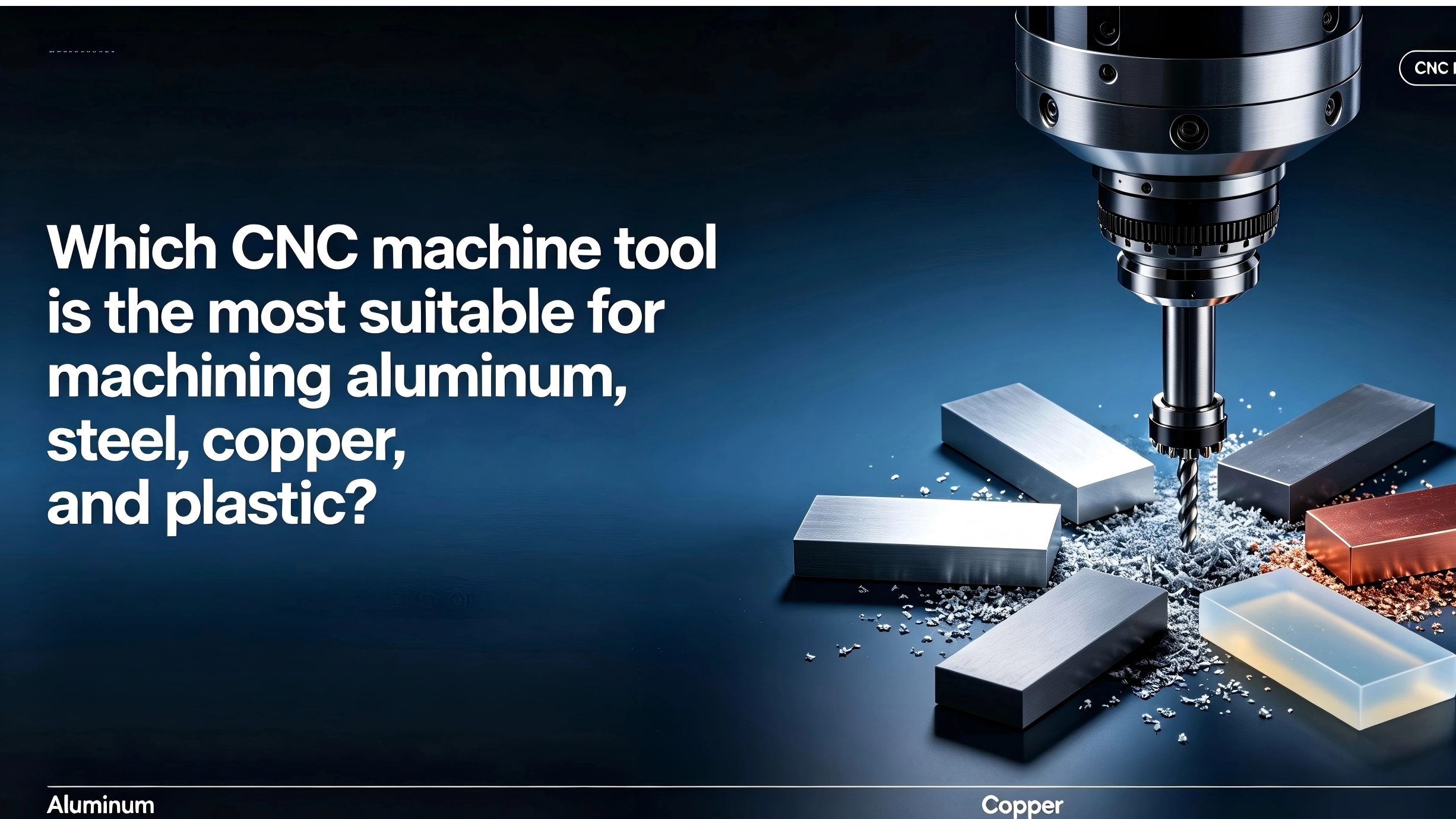 Understanding which machine tool is best suited for machining which material can assist machining factories and machine tool agents in making the optimal choice. This article introduces the materials that can be most effectively machined by CNC milling machines, CNC lathes, and CNC machining centers.CNC Machine Industry News
 -
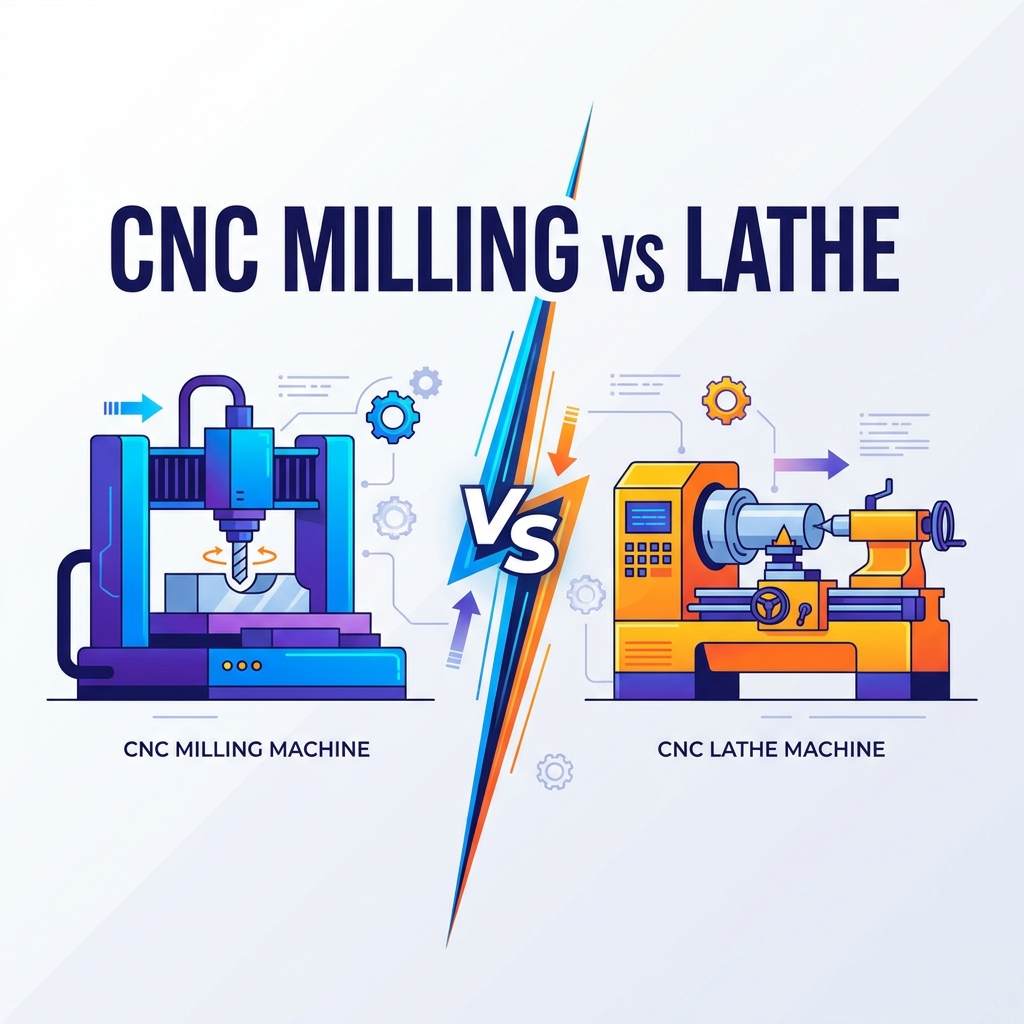 Compare CNC milling vs. turning. Learn differences in kinematics, geometry, cost, and automation to select the right machine for your production.Product news
